


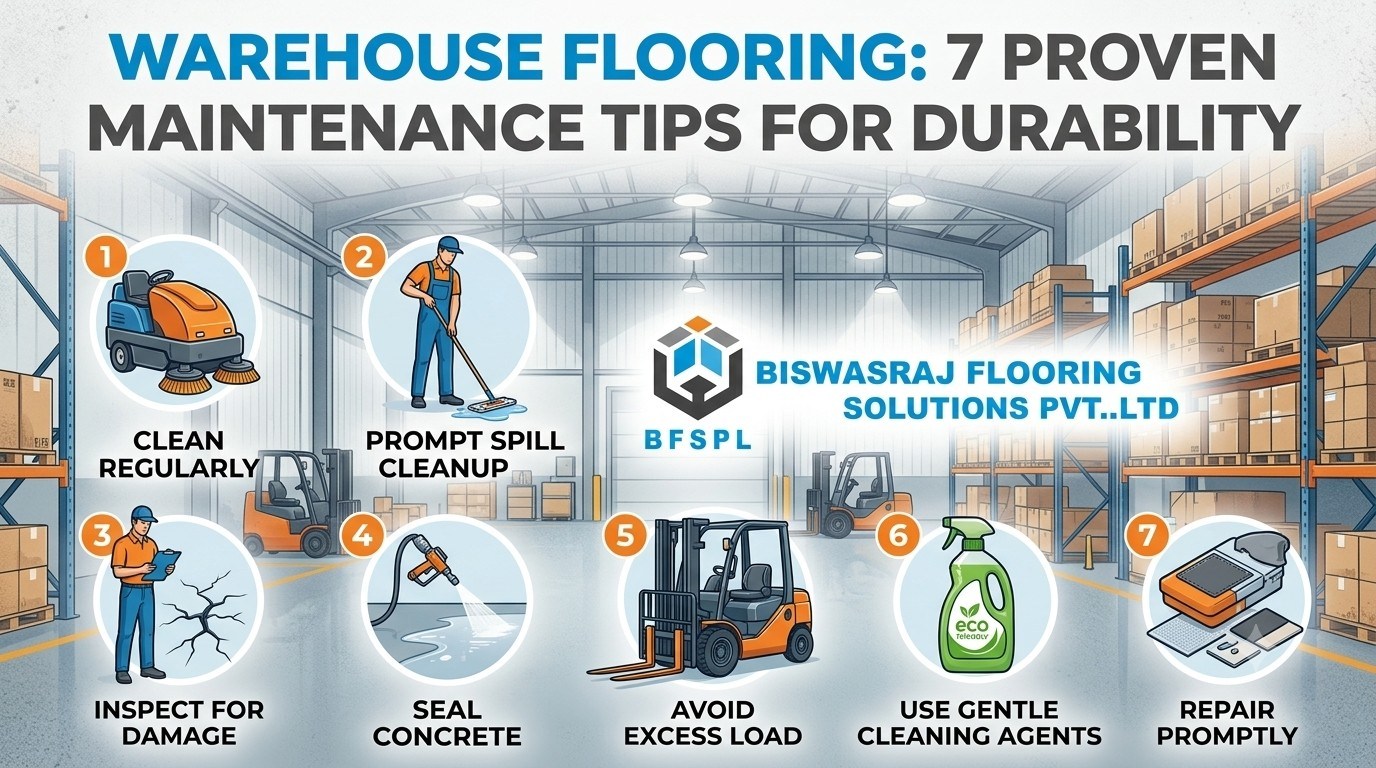
Warehouse Flooring Maintenance: 7 Proven Tips for Lasting Results
Short answer: Regular warehouse flooring maintenance helps prevent concrete dusting, cracks, joint damage and surface wear. Routine cleaning, timely repairs, spill management and professional inspections improve floor durability, reduce operational disruptions and extend the service life of warehouse floors.
Effective warehouse flooring maintenance helps facility managers identify early signs of deterioration, maintain a cleaner working environment and reduce avoidable repair interruptions. The right maintenance approach depends on the floor's condition, traffic levels, loading requirements and exposure to chemicals or moisture.
This guide explains seven practical ways to maintain warehouse floors, recognise common problems and determine when professional inspection or surface treatment may be necessary.
Why Does Warehouse Flooring Need Regular Maintenance?
Warehouse floors support more than ordinary foot traffic. They carry stored materials, heavy equipment and repeated wheel loads throughout the working day. Small surface defects can gradually worsen when forklifts repeatedly travel over the same areas.
Common problems include:
Concrete dusting: Weak surface material wears away and produces fine dust.
Cracks: Shrinkage, loading conditions, movement or underlying problems can cause cracking.
Joint deterioration: Repeated wheel impacts can chip concrete around joints.
Surface wear: Abrasion from tyres, pallets and equipment gradually damages the surface.
Oil and chemical stains: Spills can penetrate untreated concrete or affect certain protective finishes.
Uneven surfaces: Settlement, poor finishing or local damage can affect equipment movement.
Regular inspections help identify these problems before they cause more extensive damage. They also help maintenance teams distinguish cosmetic defects from issues that may require technical assessment.
7 Essential Tips for Warehouse Flooring Maintenance
1. Establish a Consistent Cleaning Routine
Dust, grit and loose particles can accumulate quickly in busy storage areas. When vehicles move over these materials, they can increase surface abrasion and spread dust across the facility.
Create a cleaning schedule based on the warehouse's activity levels. High-traffic forklift routes, loading areas and packing zones may require more frequent cleaning than storage areas with limited movement.
Use suitable industrial sweepers or vacuum equipment to remove loose particles. Select cleaning machines and pads that are compatible with the existing floor finish.
Avoid using aggressive cleaning chemicals without checking their suitability. A consistent cleaning routine helps keep the surface visible for inspections and reduces the accumulation of contaminants.
2. Inspect Cracks and Surface Damage Early
Small cracks and chipped edges can become more problematic when heavy equipment repeatedly crosses them. Damaged areas may also collect dirt and interfere with the movement of pallet trucks.
Inspect the floor regularly, paying particular attention to:
Forklift turning points and braking zones.
Loading docks and goods-handling areas.
Construction and movement joints.
Areas around heavy machinery and storage racks.
Locations where water or chemicals frequently spill.
Record the location, approximate size and progression of each defect. Photographs taken during routine inspections can help maintenance teams identify changes over time.
Do not assume every crack requires the same repair. Surface shrinkage cracks, damaged joints and cracks associated with settlement may need different solutions. Seek a qualified assessment when cracks widen, show displacement or appear alongside recurring water ingress.
3. Protect High-Traffic Routes
Repeated forklift movement can concentrate wear on particular routes. Turning, braking and carrying heavy loads may place additional demands on these areas.
Review traffic patterns to identify locations where vehicles repeatedly turn, stop or cross joints. Where operationally practical, improve route planning to reduce unnecessary movement and concentrated wear.
Keep designated pathways clear and remove loose debris that may become trapped beneath wheels. Ensure operators follow appropriate load limits and avoid impacts against floor joints and edges.
For new facilities or major upgrades, consider the equipment type, wheel loads, rack layout and movement patterns when specifying the floor system. These details influence the durability and performance requirements of an industrial flooring installation.
4. Manage Spills and Moisture Promptly
Oil, lubricants, cleaning chemicals and other liquids can stain concrete or damage incompatible protective finishes. Water accumulation may also indicate drainage problems or increase slipping risks.
Train employees to report spills promptly and follow the site's approved cleanup procedures. Use cleaning products compatible with the installed floor system.
Pay attention to recurring moisture near loading bays, washdown areas, entrances and drainage points. Investigate persistent water accumulation rather than repeatedly cleaning the same location without addressing its cause.
Where the facility handles aggressive chemicals or frequent washdowns, an appropriate protective coating may be necessary. The selection should consider chemical exposure, operating temperature, cleaning procedures and slip-resistance requirements.
5. Check Joints and Edges Regularly
Joints allow concrete slabs to accommodate movement and help control cracking. However, repeated traffic can damage joint edges, especially when forklifts cross them throughout the day.
Inspect joints for chipped concrete, loose filler, gaps and uneven transitions. Damaged edges may worsen when wheel impacts continue without repair.
Choose a repair material and joint treatment suited to the expected traffic, movement and operating conditions. The repair should provide a suitable transition for the equipment using that route.
Do not simply fill every joint with a rigid material. Joint function, width, movement and loading conditions must be considered before selecting a repair method.
6. Assess Whether Surface Treatment Is Necessary
Cleaning and routine inspections help maintain a floor, but they cannot correct every underlying problem. Persistent dusting, surface wear and recurring maintenance requirements may indicate that the concrete needs further assessment.
Floor Densification may be appropriate when an existing concrete surface is sufficiently sound but produces dust or requires improved surface hardness. A suitable chemical treatment penetrates the concrete and reacts with compounds in the cement matrix, helping to create a denser surface.
However, it is not a universal repair solution. Deep cracks, significant spalling, structural damage and severe unevenness may require other repairs before any surface treatment is considered.
For a more detailed explanation, read BiswasRaj Flooring Solutions' Floor Densification and Dust Proofing: A Practical Guide.
If you are considering treatment for an existing warehouse slab, arrange an inspection to determine whether the surface is suitable and what preparation is required.
7. Schedule Professional Inspections
A maintenance checklist is useful, but some problems require a closer technical assessment. Professional inspections can help identify the likely cause of recurring deterioration and determine which repairs are appropriate.
An assessment may examine:
The condition of the concrete surface.
Crack patterns and joint deterioration.
Surface dusting and abrasion.
Floor flatness and levelness where equipment requires it.
Moisture exposure and contamination.
Existing coatings or previous repair work.
This is particularly important in facilities with high storage racks, narrow forklift aisles or specialised material-handling equipment. Floor performance requirements should match the operating conditions rather than relying on a generic maintenance recommendation.
For warehouse design and planning, refer to the Government of India's Handbook on Warehousing Standards, which discusses floor surface regularity and related warehousing considerations.
How Can You Choose the Right Warehouse Floor Maintenance Solution?
The correct solution depends on the type and severity of the problem. Applying a surface treatment without understanding the cause can lead to unnecessary costs or unsatisfactory results.
Consider the following general guide:
These are starting points rather than final diagnoses. The appropriate treatment depends on the existing slab, the type of damage and the facility's operational requirements.
For new construction or substantial refurbishment, BiswasRaj's VDF, Trimix and IPS flooring guide can help readers explore different concrete flooring approaches.
If your warehouse floor requires repairs, surface treatment or a flooring upgrade, explore our warehouse flooring solutions to identify options suited to your facility's operational requirements.
How Can Regular Maintenance Reduce Warehouse Disruptions?
Preventive maintenance gives facility managers an opportunity to address problems before they interfere significantly with operations. It can also make repair planning more predictable.
A practical maintenance programme should include:
Daily removal of dust, loose debris and spills.
Routine checks of busy routes and loading zones.
Scheduled inspection of cracks and joints.
Records of recurring defects and completed repairs.
Periodic assessment of surface treatments and coatings.
Planned repair work that considers warehouse operating schedules.
Maintenance does not eliminate every possibility of floor damage. However, a consistent process helps teams identify deterioration, investigate recurring problems and select appropriate corrective measures.
Frequently Asked Questions
1. How Often Should Warehouse Floors Be Inspected?
Inspect high-traffic areas frequently as part of routine housekeeping. Conduct more detailed inspections at scheduled intervals based on traffic intensity, equipment loads, floor condition and the facility's maintenance policy. Recheck any damaged areas to determine whether deterioration is progressing.
2. What Causes Concrete Dust on Warehouse Floors?
Concrete dusting can result from a weak surface layer, inadequate curing, finishing problems, abrasion or prolonged traffic. Repeated sweeping may remove loose particles temporarily without addressing the underlying cause. Persistent dusting warrants an assessment of the concrete surface.
3. Can Floor Densification Repair Cracked Concrete?
No. Densification can help harden a suitable concrete surface and reduce dusting, but it does not repair deep cracks, structural defects or significant settlement. Damaged areas should be assessed and repaired using an appropriate method.
4. What Is the Best Way to Protect Industrial Flooring From Forklift Damage?
Use suitable floor specifications, maintain joints and damaged areas, keep routes clean and ensure equipment operates within appropriate loading limits. The correct approach also depends on wheel type, traffic frequency, turning movements and the floor's existing condition.
5. When Should a Warehouse Floor Be Repaired or Replaced?
Repair may be suitable when damage is localised and the underlying slab remains serviceable. Extensive deterioration, severe unevenness, recurring structural problems or widespread surface failure may require a broader assessment to compare repair, resurfacing and replacement options.
6. Does Warehouse Floor Maintenance Require Special Cleaning Products?
Not always. Many floors can be maintained with compatible neutral cleaners and suitable cleaning equipment. However, coatings, chemical exposure and site hygiene requirements can affect product selection. Follow the flooring system manufacturer's recommendations.
7. How Can I Improve the Durability of an Existing Warehouse Floor?
Start with regular cleaning, early defect identification, prompt spill management and routine joint inspections. If dusting, cracking or surface wear continues, arrange a professional assessment to identify the cause and determine whether repairs or a suitable surface treatment are needed.
Protect Your Warehouse Floor With the Right Maintenance Plan
A well-maintained concrete floor supports safer movement, cleaner storage areas and more dependable warehouse operations. Regular cleaning, timely repairs and professional inspections help identify issues before they develop into larger problems.
BiswasRaj Flooring Solutions Pvt. Ltd. can be approached to discuss your warehouse flooring requirements and assess suitable flooring or surface-treatment options for your facility.
Contact BiswasRaj Flooring Solutions through its official website to discuss your project and determine the next steps for maintaining or improving your warehouse floor.