

Epoxy Flooring Cost in India: What Warehouses Actually Pay
 10 Aug 2026
Epoxy Flooring Cost in India: What Warehouses Actually Pay
- Posted by Sathish K
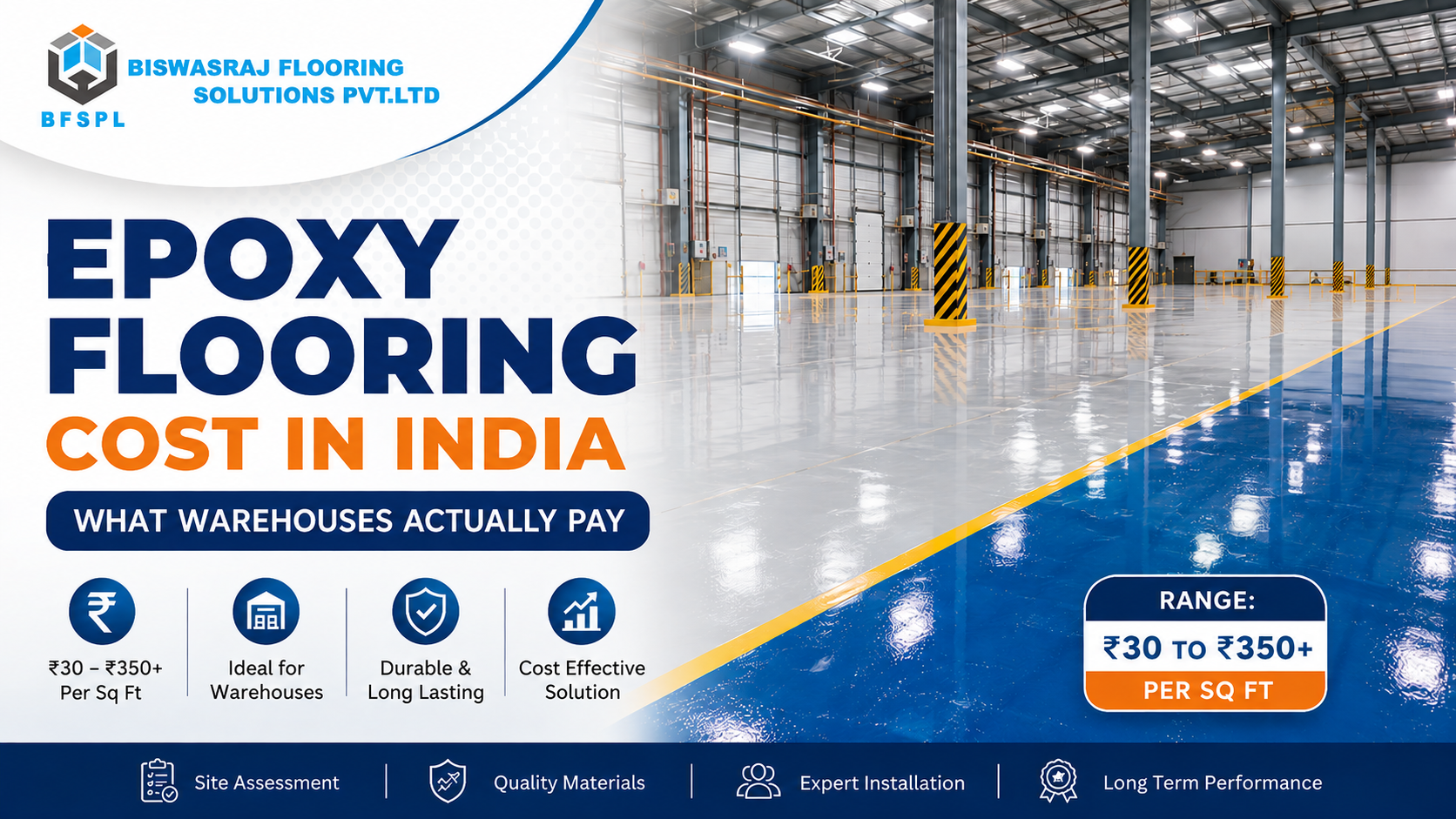
Epoxy flooring cost in India runs from about ₹30 to ₹350 or more per square foot, and the gap between those two numbers is almost entirely down to the system, the substrate and the site, not the brand of resin on the tin.
A vague quote from a contractor is how flooring budgets go wrong before the first coat is even mixed. Alongside our other industrial flooring guides, this post breaks down what actually drives the price, what a warehouse or factory floor costs city by city, and how to get a number for your own site that you can trust.
The Short Version
• Typical rates fall between ₹30 and ₹350 per sq ft, driven mostly by system type and floor prep
• Basic single coats suit light foot traffic; heavy duty systems suit forklifts and chemical spills
• Old, cracked or oily concrete adds prep cost before any resin goes down
• Metro cities like Delhi and Mumbai usually run higher than smaller towns for the same job
• A site visit, not a phone call, is what turns a price band into a real quote
What Is Epoxy Flooring Cost In India Right Now?
Epoxy flooring cost in India ranges from roughly ₹30 per sq ft for a basic single coat to ₹350 or more for a heavy duty, self-leveling or decorative system. Thickness, the number of coats and how much surface prep the slab needs explain most of that spread.
|
System |
Typical Cost (₹/sq ft) |
Best For |
|
Basic single coat |
30 to 60 |
Light foot traffic, showrooms |
|
Standard industrial broadcast |
60 to 150 |
Warehouses, factory floors |
|
Heavy duty self-leveling |
150 to 250 |
Forklift traffic, chemical exposure |
|
Decorative or 3D system |
250 to 350+ |
Design-led commercial spaces |
These are installed rates, meaning material and labor together, drawn from published pricing across Indian flooring contractors and material suppliers. Treat the table as a band, not a quote for your site.
Before you compare two numbers, ask each contractor to confirm the coating thickness, the number of coats and exactly what prep work is included. A thin single coat and a three-coat broadcast system are not the same product, even at a similar headline rate.
Most published bands also exclude GST, structural repair to a broken slab, and any annual maintenance contract. Ask for these three items as separate line items rather than a single lump sum, so you can see what you are actually paying for the coating itself versus everything around it.
What Factors Change Industrial Epoxy Flooring Cost Per Sq Ft?
Five things move epoxy flooring cost in India more than anything else: the condition of the existing slab, the coating system and thickness you pick, the total floor area, the city you build in, and how much surface prep the concrete needs before the first coat goes down.
• Substrate condition: cracked, oily or dusty concrete needs grinding and repair before coating starts
• System and thickness: a 3mm broadcast system costs more per sq ft than a 1mm coat
• Floor area: larger jobs usually bring the per sq ft rate down, since mobilization is spread wider
• City and labor rates: metro cities generally run higher than smaller towns for the same system
• Prep work: shot blasting, crack filling and moisture testing all add to the final bill
Industrial epoxy flooring cost per sq ft moves the most when the slab needs heavy grinding or a thicker, multi-coat system rather than a quick single-coat job. A floor that looks fine from a distance can still fail a moisture test.
That single check can change the whole quote, which is why two contractors walking the same site sometimes come back with numbers that are far apart, even before either one has opened a tin of resin.
How Does Epoxy Flooring Cost Compare Across Indian Cities?
City by city, epoxy flooring cost in India shifts more with local labor rates and material transport than with the coating itself. Delhi and Mumbai usually sit at the top end of the range, while Chennai tends to run lower for a similar system and thickness.
|
City |
Typical Range (₹/sq ft) |
|
Delhi |
65 to 160 |
|
Mumbai |
60 to 110 |
|
Bangalore |
50 to 100 |
|
Chennai |
40 to 85 |
Rates like these also track how fast the warehousing market itself is growing. India’s top eight cities saw industrial and warehousing leasing rise 12 percent year on year to nearly 22 million square feet in the first half of 2026, with Delhi NCR and Chennai together driving more than 45 percent of that demand, according to a Colliers report.
More warehouses under construction in a city usually means more contractors bidding for flooring work there. That is part of why local rates shift year to year, and why a Delhi quote and a Chennai quote for the same job rarely match.
How Much Does Epoxy Flooring Cost For A Warehouse?
For a mid-size warehouse, epoxy flooring cost in India usually lands between ₹60 and ₹150 per sq ft for a standard industrial broadcast system, before GST and any structural repair. At that rate, a 20,000 sq ft warehouse floor works out to roughly ₹12 lakh to ₹30 lakh installed, depending on thickness and prep.
That range assumes a sound slab to start with. If the existing concrete is cracked, oily or uneven, repair and prep costs sit on top of the coating price.
Our epoxy flooring services start with a site assessment for exactly this reason. A weak patch missed on paper will show up under forklift traffic within months, and fixing it after the fact always costs more than catching it before the first coat.
What Does Epoxy Flooring Installation Cost Include?
Epoxy flooring installation cost covers more than the resin itself. A proper job typically includes surface grinding or shot blasting, crack and spall repair, a primer coat, the base epoxy layer at the agreed thickness, and a topcoat for UV stability and added abrasion resistance.
• Surface prep: grinding, patching and moisture testing before anything is coated
• Primer: seals the slab and gives the epoxy a bonding layer to grip
• Base coat: the main wear layer, applied at the thickness your traffic needs
• Topcoat: adds gloss, UV stability and extra chemical or abrasion resistance
• Add-ons: anti-skid or anti-static additives, where the floor calls for them
If the slab itself is weak, uneven or badly cracked, no epoxy system fixes that on its own, no matter how good the topcoat is. Some warehouses are better served by relaying the base first with VDF flooring.
Epoxy then goes on top only where chemical resistance, hygiene or a specific color scheme is genuinely needed, over a dense, properly cured slab.
Timeline affects cost too, since a faster turnaround usually means extra labor or shift work. Most epoxy flooring installations run three to seven days depending on area and coat count, and a contractor asking for a rushed one or two day finish on a large industrial floor is a sign that a step, most often cure time between coats, is being skipped.
How Do You Get An Accurate Epoxy Flooring Cost Estimate?
Getting an accurate epoxy flooring cost in India starts with a site visit, not a phone call. A contractor needs to see the actual slab, test it for moisture and measure the real area before any number on a call means much at all.
1. Share your floor area, industry and expected traffic, such as forklifts, foot traffic or chemical spills
2. Book a site visit so the contractor can check slab condition, cracks and moisture levels directly
3. Ask for a written quote that separates material, labor and surface prep as line items
4. Confirm the coating thickness and number of coats in writing before work begins
5. Compare at least two quotes for the same system and thickness, not just the bottom line figure
Skipping the site visit is the single most common reason a final bill runs over the number a customer had in mind. A five-minute call cannot see a hairline crack or test for rising moisture, and both of those change the price more than almost anything else on this list.
A quote that comes in far below every other bid is worth a second look before you sign. It usually means one of the layers is being thinned out, the prep is being skipped, or GST and repair costs will surface later as a separate bill. The cheapest number on paper is rarely the cheapest floor over its actual working life.
Frequently Asked Questions
What is epoxy flooring cost in India for a small workshop?
For a workshop under 2,000 sq ft, epoxy flooring cost in India usually runs ₹45,000 to ₹1.5 lakh for a standard system, depending on floor condition and coating thickness.
How long does epoxy flooring last in a warehouse?
A well prepared industrial epoxy floor typically lasts eight to ten years under regular forklift and pallet truck traffic, and longer with lighter use and routine maintenance.
Is epoxy flooring cheaper than VDF flooring?
Not always. VDF densifies the concrete itself and often costs less per sq ft, while epoxy adds a seamless, chemical resistant surface on top for a higher price.
Does epoxy cost more than tiles or granite for a factory floor?
Upfront, tiles can look cheaper, but epoxy has no grout lines to fail and needs far less repair over time, which usually makes it the lower lifetime cost.
Can old, damaged concrete get epoxy flooring without a big cost jump?
Usually yes. Cracks and spalls are ground out and patched before coating. Severely broken slabs may need structural repair first, which does add to the total bill.
What increases epoxy flooring installation cost the most?
Heavy surface prep on old, oily or uneven concrete adds the most, followed by choosing a thicker, multi-coat or decorative system over a basic single coat.
Where Do You Go From Here?
The only way to turn these bands into a real number is a site visit, since epoxy flooring cost in India depends on your actual slab, not an industry average. Request a free site visit and quote and we will walk the floor, check the concrete, and price the system that actually fits your traffic and your budget.