

Soil Bearing Capacity and Industrial Flooring : A Complete Guide
 04 Sep 2026
Soil Bearing Capacity and Industrial Flooring : A Complete Guide
- Posted by Nagananda Udupa
Industrial floors can be a real problem. They need to be strong and hard wearing. They have to cope with intense traffic and heavy loads. But the strength and resilience of your industrial floor isn’t just down to the materials and method of installation. Not to be overlooked is the soil bearing capacity, and how it relates to industrial flooring. The ground needs to be strong enough to take the weight without settling or moving.
Warehouses, factories, manufacturing units, workshops, and commercial facilities – all are in need of industrial flooring to improve the efficiency of the floor and its service life. A professional flooring service can analyze your site and suggest the best type of flooring based on your building.
What Is Soil Bearing Capacity?
Soil bearing capacity is generally the ability of soil to support the weight of the overlying load without failing. In other words, the load bearing capability of the soil varies depending on the type of soil, its condition, preparation, ground water level, and a host of other factors
Before laying the industrial floor, it is essential for you to understand the condition of the ground. After all, the inadequate bearing capacity may result in cracking, flooring unevenness, and so on.
Importance of Soil Bearing Capacity in Industrial Flooring
Industrial floors are subjected to much higher load compared to residential buildings. The use of fork-lifts, heavy-duty equipment, storage, vehicles and pallets contribute to intense traffic and loading.
But the connection between ground and industrial flooring goes deeper than that.
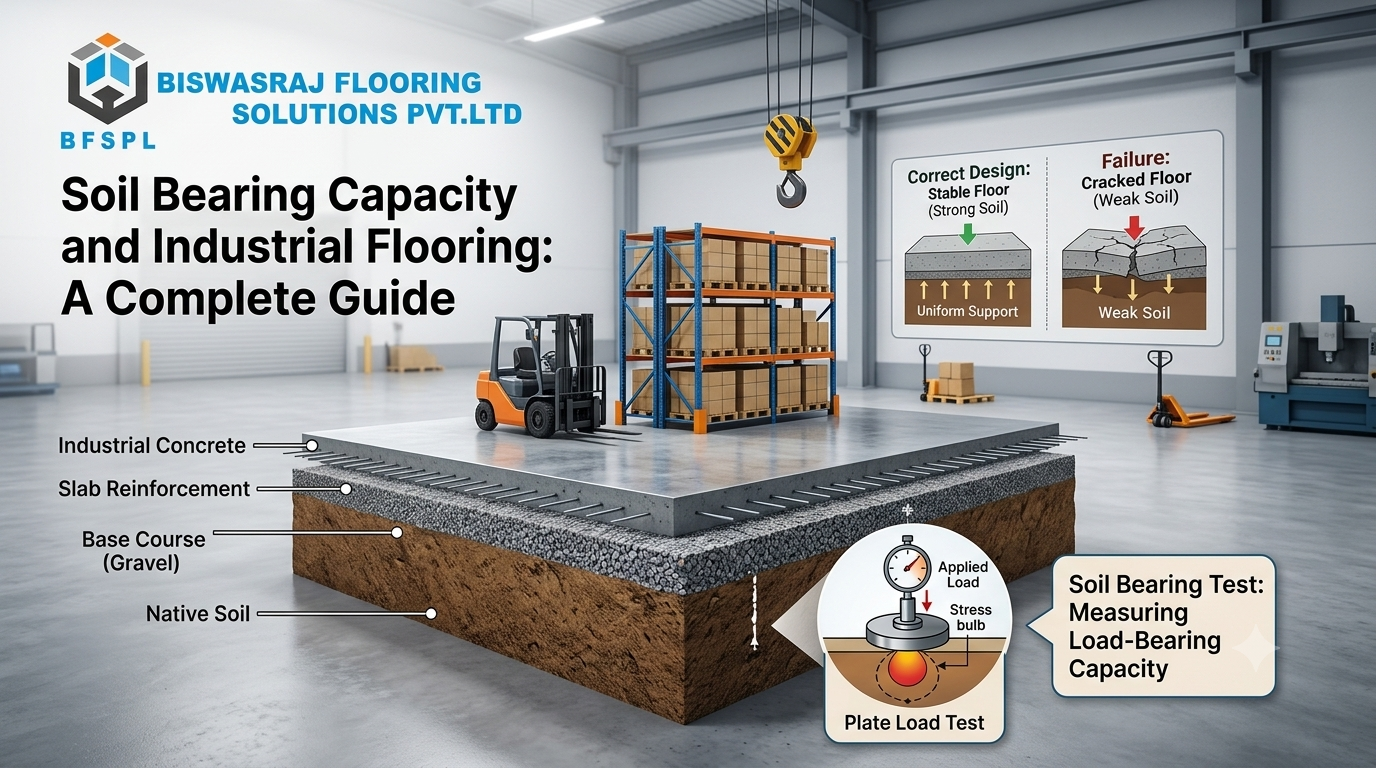
A well-prepared ground and the right flooring system work together to carry the intended load without failure, cracking, undue settlement or deflection.
Factors That Influence Flooring Performance
Factor Description
Soil strength The bearing capacity of the soil influences the load-supporting capability directly
Compaction Proper compaction reduces movement and settling
Moisture Ground moisture can impact the performance of your flooring
Heavy loading Heavy objects exert extra pressure on the floor
Surface preparation Proper preparation ensures good bonding, finishing and performance
How Soil Conditions Affect Floors
Poor preparation leads to poor performance. Uneven settlement causes cracking and unevenness. Failure to properly compact the soil leads to weak spots and problem areas. Ground moisture plays a role in determining the suitability and performance of your chosen industrial flooring system.
That is why it is important to look at your floor from top to bottom. The subgrade, base course, concrete slab, preparation and your selected flooring system are all interconnected and must be considered during the planning stage.
Selecting the Right Flooring For Your Industrial Floor
Industrial facilities have different needs and requirements depending on their purpose. A warehouse has different needs vs a manufacturing facility. Some facilities involve intense abrasion and impact, while others involve high traffic and high machinery loads. Some facilities require special flatness or strength specifications to be followed.
Depending on the needs of your facility, a variety of flooring systems can be considered, including epoxy flooring, VDF flooring, laser screed flooring, super flat flooring, FM flooring, and more
Based on the type and degree of traffic, load, type of machinery and vehicles, required flatness, abrasion and chemical resistance, level of maintenance, and other factors, an appropriate flooring system can be suggested by a professional flooring contractor.
Importance Of Professional Flooring Service
Industrial flooring is never a simple job. It requires a certain degree of planning and execution, along with an understanding of industrial facilities and their specific needs and concerns. No matter how good your industrial flooring system is, if the surface is not properly prepared, it will fail to deliver the intended performance. A professional flooring team will be able to advise you on the most suitable industrial flooring system for your facility.
The professional flooring contractors will also be aware of potential problem areas and will plan accordingly. After all, your investment in a new industrial flooring system will be wasted if the inadequate preparation or poor workmanship leads to a failed coating or flooring system
How Quality Industrial Flooring Improves Operations
An efficient and well-maintained flooring system can make a world of difference to your day-to-day operations. It can make your workers’ job easier, increase productivity and improve general safety. Industrial facilities that require frequent cleaning and maintenance can benefit from a smooth, seamless flooring system with minimal dirt retention. Warehouses and manufacturing facilities can see an increase in efficiency and safety with a properly prepared and smooth floor that allows forklifts, trucks, and other machinery to operate smoothly and with less downtime. It adds to the aesthetics of the place as well.
Most importantly, a proper understanding of your soil bearing capacity and its relevance to industrial flooring will allow you to choose the best possible flooring system for your facility.
Frequently Asked Questions
1. What is soil bearing capacity?
Soil bearing capacity is the ability of soil to safely support the applied loads without excessive settlement or failure
2. Why is soil bearing capacity important for industrial flooring?
Industrial floors are subjected to heavy machinery, vehicles, fork-lifts, storage, abrasion and impact. This is why it is important to understand your ground conditions before you lay your flooring system
3. What are the various types of industrial flooring?
Depending on your application, you could choose from a variety of flooring systems, including Epoxy flooring, VDF flooring, Laser Screed flooring, Super Flat flooring, and more
4. Can weak soil impact an industrial floor?
Yes, inadequate bearing capacity can impact your flooring system adversely. Settlements, cracks, and unevenness can occur due to weak or inadequately compacted soils
5. Why should I go for a professional flooring service?
Industrial flooring involves complex considerations. A professional flooring service will ensure that your site is properly prepared, the suitable type of flooring is selected, and proper surface preparation is done to enhance the performance of your flooring system for years to come
Conclusion
Soil bearing capacity and industrial flooring have a direct connection. Industrial facilities need strong and resilient floors to withstand heavy traffic and loading. But the strength and resilience of your floor begins beneath the surface with the condition of the ground.
Warehouses, manufacturing facilities, and other industrial facilities can benefit from a strong, seamless flooring solution that will improve the performance, safety, and efficiency of the whole operation. If you are looking to improve your floors, or replace your current flooring system, contact BiswasRaj Floorings to get advice and choose the best flooring option for your facility.