

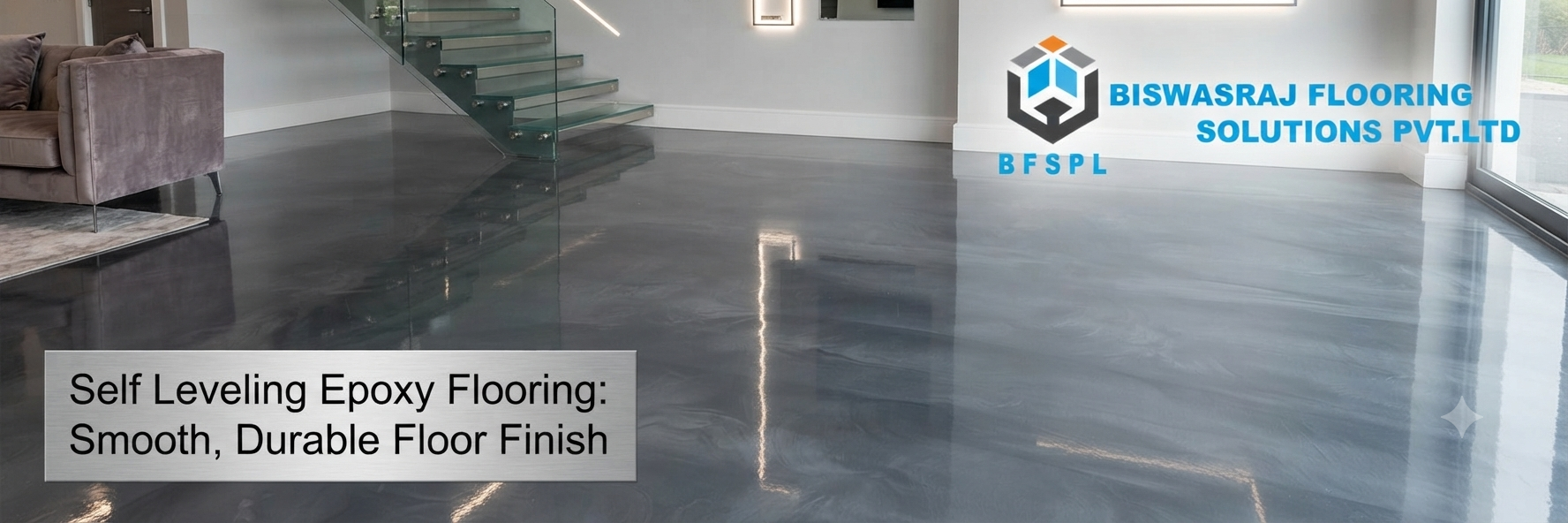
Self Leveling Epoxy Flooring: Smooth, Durable Floor Finish
 23 Sep 2026
Self Leveling Epoxy Flooring: Smooth, Durable Floor Finish
- Posted by Nagananda Udupa
Uneven, worn or difficult-to-clean concrete floors can present a challenge in warehouses, factories, commercial areas and other high-traffic areas. A properly designed Self Leveling Epoxy Flooring system can create a smooth and seamless surface while providing durability, cleanliness and improved day-to-day maintenance.
Unlike a basic coating that may be applied as a relatively thin layer, a self-leveling system is formulated to spread and cover the prepared surface to provide a more uniform finish. The final performance will still depend on substrate condition, preparation and material selection and installation quality.
The Short Version
Self Leveling Epoxy Flooring provides a smooth and seamless surface over a properly prepared concrete substrate. Suitable for many warehouses, factories, commercial areas and high-traffic facilities. Proper grinding or shot blasting is essential. Cracks, damaged concrete and uneven patches should be addressed before the epoxy system is installed. Abrasion resistance, chemical resistance and easier cleaning can be provided by a Self Leveling Epoxy system. A system is not a replacement for severe damaged or structurally unsound concrete. The correct system will depend on traffic, chemical exposure, substrate condition and the desired finish
What Is Self Leveling Epoxy Flooring?
Self Leveling Epoxy Flooring is a resin-based flooring system that is designed to flow and spread across a prepared concrete surface before curing to a hard and seamless finish.
Typically a mix of epoxy resin and hardener plus selected aggregates or fillers depending on the requirements for the project. Mixed and applied at the appropriate thickness, self-leveling epoxy spread across the floor to form a smooth finish.
This is different to a conventional Floor Coating, where the material may be applied as a thinner covering primarily to protect and seal the concrete.
BiswasRaj Flooring lists self-leveling epoxy as an option for high-traffic units and includes inspection of the substrate, moisture checks, preparation, crack repair, primer application and epoxy application and curing in the flooring process.
How Does Self Leveling Epoxy Create A Smooth Floor?
The finished floor depends on what is carried out prior to the application of the epoxy.
First the existing concrete should be inspected. The contractor should identify cracks, weak patches, contamination, moisture concerns and areas that require repair.
The surface is then prepared mechanically, commonly diamond grinding or shot blasting. This removes latitude, contaminants and unsuitable surface material and creates a profile for the epoxy to bond to. Following repairs and priming, the epoxy material is mixed according to the manufacturer's requirements and spread over the prepared floor. A suitable tool is then used to spread the material appropriately, and deaeration may be carried out where required. Finally the floor is allowed to cure for the appropriate time period before traffic and equipment are returned. A well-designed system can address several surface related problems, assuming the underlying concrete is suitable. Can help to create a uniform finish on concrete which has minor surface irregularities, can seal the surface and reduce exposed pores and can provide a finish that is easier to clean. Common situations where the system may be considered include: Worn concrete surfaces Difficult-to-clean floors High-traffic areas Minor surface imperfections Floors in need of a seamless finish Areas which are regularly abraded Commercial areas which require an attractive durable surface However, severe structural damage should not be simply covered with epoxy. If the slab has significant movement or settlement or extensive deterioration the underlying problem should be assessed and repaired first. Severe cracks, spalling or damaged concrete should be assessed and repaired before applying an epoxy system. You can learn more about industrial floor repair and the importance of addressing substrate problems first. Self Leveling Epoxy Flooring can be considered for different environments that require a smooth, durable and easy to maintain surface. Warehouses experience continuous movement from pallet trucks, forklifts and other equipment. A properly specified epoxy system can provide a hard wearing surface while making routine cleaning easier. Manufacturing facilities may require a flooring system that can withstand traffic, abrasion and occasional chemical or oil exposure. The correct epoxy specification should be selected according to the actual operating conditions. Showrooms, offices and retail environments can benefit from a seamless finish that is easier to clean than floors with numerous joints. Areas that experience frequent movement of people, carts or equipment can require a durable surface with suitable abrasion resistance. The appropriate system should always be selected after considering the substrate, anticipated traffic, and environmental exposure rather than selecting a coating based only on appearance. One of the main benefits is the seamless appearance. With no conventional grout joints across the coated surface, routine cleaning can become simpler. Other potential benefits include: Smooth and uniform appearance Good abrasion resistance Resistance to many common chemical exposures Easier routine cleaning Reduced dust and exposed concrete pores Suitable finishes for industrial and commercial environments Options for different colours and functional requirements Long service life when correctly specified and maintained BiswasRaj states that its epoxy systems are designed for applications which include forklift traffic, industrial use, chemical exposure and easy cleaning, with different grades according to the site requirements. The benefits you receive will depend on the complete flooring system rather than simply the epoxy material itself. A professional installation normally follows a controlled sequence. The contractor inspects the concrete condition, moisture, cracks, uneven areas, contamination and anticipated traffic. Grinding or shot blasting removes weak surface material, oil, dirt and unsuitable previous coatings. Cracks, spalls, damaged patches and other defects are repaired prior to the main flooring system being installed. A suitable primer helps to achieve adhesion between the prepared concrete and the epoxy system. The mixed material is spread across the prepared floor at the appropriate thickness. The method of application depends on the system and project requirements. Where required, suitable tools and techniques are used to help release trapped air to maintain a consistent finish. The floor must remain undisturbed for the required curing period before foot traffic, equipment or vehicles can be allowed back onto the surface. BiswasRaj follows a similar process covering substrate assessment, mechanical preparation, crack repair, primer, epoxy application, functional layers, topcoat and curing. Understanding different epoxy flooring types can help you compare systems based on thickness, application method, durability and intended use. Professional installation should follow an appropriate specification for substrate preparation, application and curing. The IS 4631:1986 code of practice for laying epoxy resin floor toppings, listed by the Bureau of Indian Standards, provides an India-specific technical reference for epoxy resin floor topping work. Both systems can protect concrete, but their construction and applications can differ. The exact difference will depend on the product system, thickness specified and method of installation. A contractor should therefore recommend the system based on site conditions rather than using the terminology alone. Several factors determine how the finished floor will perform. Concrete condition: Weak or contaminated concrete will affect adhesion. Moisture: Excess moisture in the substrate will create problems for certain epoxy systems. Surface preparation: Grinding or shot blasting must remove contaminants and provide the required surface profile. Traffic: Forklifts, pallet trucks and heavy equipment require an appropriate flooring specification. Chemical exposure: Oils, solvents, acids and other chemicals should be considered before selecting the resin system. Application thickness: The required thickness depends on the anticipated use and selected system. Curing: The floor needs adequate curing time and suitable environmental conditions. Ignoring these factors can reduce the expected performance of even a high quality epoxy material. Regular maintenance helps to preserve both appearance and performance. Start by removing dust and loose debris through routine sweeping or suitable mechanical cleaning. Clean up spills promptly, especially where oils or chemicals are present. Use cleaning products that are compatible with the installed epoxy system. Avoid aggressive cleaning methods that are not specifically recommended for the flooring. Heavy equipment should also be operated carefully. Repeated impact, dragging sharp objects or exposing the floor to unsuitable chemicals can damage the surface over time. Regular inspections can help to identify early signs of wear, impact damage, cracking or loss of adhesion before they become larger issues. Consider Self Leveling Epoxy Flooring where you need a seamless and durable surface over an appropriate concrete substrate. It can be particularly relevant when: The floor will experience regular traffic. You require a smooth seamless finish. Cleaning and hygiene are important. The concrete requires a protective surface. The facility needs a durable industrial or commercial finish. You want a flooring system designed around specific site conditions. However, it should not be chosen simply because the term "self-leveling" sounds suitable. The existing concrete, moisture condition, traffic, chemical exposure, thickness required and service conditions to be considered first. It is a resin-based flooring system that is spread over a properly prepared concrete substrate to create a smooth and durable finished surface. Yes, it can be suitable for industrial environments when the system is correctly specified for the site's traffic, abrasion, chemical exposure and substrate conditions. They serve different purposes. A self-leveling system is generally designed as a thicker flooring system to create a smooth finish, while a conventional coating may be used as a thinner protective layer. The right choice will depend on the floor and application. Minor defects can generally be repaired prior to application. Severely damaged or structurally unsound concrete needs appropriate repair before an epoxy flooring system is installed. The installation period will depend on the floor area, substrate condition, number of layers and curing requirements. BiswasRaj states that many of its epoxy projects take approximately three to seven days, depending on these factors. A seamless epoxy surface is generally easier to clean than a floor with numerous joints. Regular cleaning, prompt spill removal and appropriate maintenance help to preserve the finish. Choosing a flooring system starts with understanding your existing concrete and anticipating how the floor will be used. Self Leveling Epoxy Flooring can provide a smooth and durable surface, but the preparation, material specification and installation process are as important as the final coating. BiswasRaj Flooring Solutions provides epoxy flooring system solutions for industrial, commercial and other applications, including self-leveling systems for high-traffic units. If your floor needs a durable seamless finish, start with a site assessment. A professional evaluation can help determine whether self-leveling epoxy, another epoxy system, concrete polishing or a different flooring solution is appropriate for your facility. For expert guidance and a suitable self leveling epoxy flooring solution, contact BiswasRaj FlooringSolutions today. What Floor Problems Can Self Leveling Epoxy Flooring Address?
Where Is Self Leveling Epoxy Flooring Used?
Warehouses
Factories
Commercial Facilities
High-Traffic Units
What Are The Main Benefits Of Self Leveling Epoxy Flooring?
How Is Self Leveling Epoxy Flooring Installed?
1. Inspect The Existing Floor
2. Prepare The Surface
3. Repair Defects
4. Apply The Primer
5. Apply The Epoxy System
6. Remove Entrapped Air
7. Allow Proper Curing
How Is Self Leveling Epoxy Different From Standard Floor Coating?
What Factors Affect Self Leveling Epoxy Flooring Performance?
How Should You Maintain A Self Leveling Epoxy Floor?
When Should You Choose Self Leveling Epoxy Flooring?
Frequently Asked Questions
What Is Self Leveling Epoxy Flooring?
Is Self Leveling Epoxy Suitable For Industrial Floors?
Is Self Leveling Epoxy Better Than A Regular Floor Coating?
Can It Be Applied Over Damaged Concrete?
How Long Does Epoxy Flooring Take To Install?
Is Self Leveling Epoxy Easy To Maintain?
Is Self Leveling Epoxy Flooring Right For Your Facility?
Need Expert Flooring Guidance?