

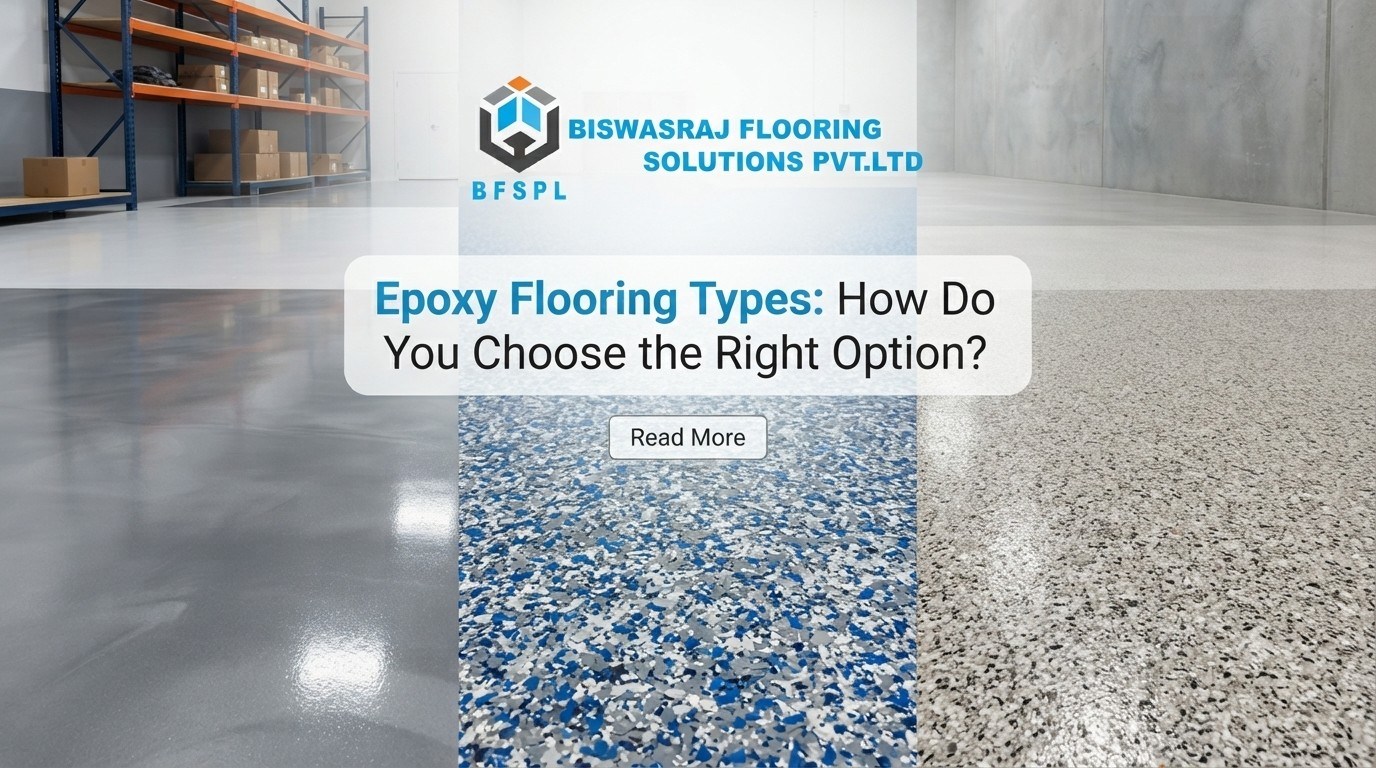
Epoxy Flooring Types: How Do You Choose the Right Option?
 08 Oct 2026
Epoxy Flooring Types: How Do You Choose the Right Option?
- Posted by Nagananda Udupa
Epoxy flooring is available in different formulations and application systems, so choosing the right type depends on the floor’s traffic, chemical exposure, surface condition, and intended use. A warehouse, factory, commercial space, and garage may require different epoxy flooring solutions. Instead of choosing a coating only by appearance or epoxy flooring price, you should first identify the performance requirements of the floor. The right system can improve durability, cleaning, chemical resistance, and long-term floor performance. Different epoxy systems are designed for different performance requirements. The main options include epoxy coating, self-leveling epoxy, mortar epoxy, and anti-slip epoxy systems. Epoxy floor coating is a common option for surfaces that need improved protection and easier maintenance. It can provide a smooth finish and help protect concrete from everyday wear. It can be suitable for areas such as workshops, commercial spaces, storage areas, and light industrial environments where the floor does not face extreme mechanical loads. Self-leveling epoxy is designed to create a smooth and relatively seamless surface. It can be useful where appearance, cleanability, and a uniform finish are important. This system is often considered for commercial buildings, production areas, laboratories, healthcare facilities, and other spaces where a smooth floor is beneficial. Epoxy mortar systems contain aggregates that provide greater thickness and strength than standard coating systems. They can be considered for areas exposed to heavier mechanical stress. Factories, workshops, loading areas, and industrial spaces may require this type of flooring when ordinary coating systems are not sufficient for the expected conditions. Anti-slip epoxy systems are designed to improve floor traction. Aggregates can be incorporated into the surface to provide additional grip. This can be useful in areas where water, oil, or other substances could make a smooth floor slippery. Industrial floors often experience heavier traffic and greater mechanical stress than ordinary commercial floors. Forklifts, pallet movement, machinery, chemicals, and frequent cleaning can all affect floor performance. Before selecting a system, consider: Type and weight of traffic Frequency of forklift movement Chemical exposure Impact from equipment or materials Cleaning requirements Required slip resistance Existing concrete condition A system that works well in a light-use area may not provide enough protection for a heavy industrial environment. The application requirements should therefore guide the selection. For a broader understanding of industrial flooring requirements, explore our guide to choosing the right industrial flooring solution. Warehouses need floors that can handle regular movement of people, equipment, pallets, and material-handling vehicles. A suitable system should provide adequate abrasion resistance and a surface that is easy to clean. If forklifts operate regularly, the flooring system should also be selected according to the expected wheel loads and traffic intensity. For warehouses with moisture or spill risks, an appropriate surface texture may also be necessary to improve safety. Choosing an epoxy system involves more than comparing anepoxy flooring cost. You should evaluate the complete floor requirement before selecting the specification. The concrete surface should be checked for cracks, weak areas, contamination, moisture, and unevenness. Poor surface preparation can affect adhesion and the service life of the finished floor. Consider whether the floor will experience pedestrian traffic, hand trolleys, forklifts, heavy equipment, or vehicle movement. Factories and processing areas may have exposure to oils, solvents, cleaning chemicals, acids, or other substances. The flooring system should be selected according to the chemicals involved. Moisture in the concrete can affect epoxy adhesion and performance. The substrate condition should be assessed before application. A smooth surface may not be appropriate for every environment. Areas exposed to water, oil, or frequent washing may require a slip-resistant finish. Epoxy can be applied to many properly prepared concrete surfaces, but the condition of the substrate matters. New concrete needs adequate curing before application. Existing concrete may require grinding, cleaning, crack treatment, or other preparation before the epoxy system is installed. Paint, oil, dust, latitude, moisture, and weak concrete can interfere with adhesion. Proper preparation is therefore an important part of the flooring process. For additional technical guidance on assessing concrete floors before applying floor finishes, refer to the ASTM International standard for concrete floor preparation. Surface preparation creates the foundation for the epoxy system. Depending on the condition of the concrete, preparation may include mechanical grinding, cleaning, repairing cracks, removing contaminants, and treating damaged areas. The exact preparation method depends on the substrate and the selected system. A high-quality epoxy material cannot compensate for a poorly prepared surface. This is why the installation process should be considered along with the material specification. When comparing different systems, look beyond the initial epoxy flooring price. Consider the following: 1. Expected service conditions 2. Required thickness 3. Surface preparation 4. Mechanical load 5. Chemical exposure 6. Slip resistance 7. Maintenance requirements 8. Expected service life A lower initial price does not necessarily mean a better flooring solution. A system selected according to the actual application can provide better long-term value. Professional assessment can help identify the condition of the concrete and the performance requirements of the site. The flooring team can evaluate the substrate, traffic conditions, moisture, chemical exposure, and intended use before recommending an appropriate system. This approach also helps avoid selecting a coating that is unsuitable for the environment. If you are planning an industrial, commercial, warehouse, or other concrete flooring project, BiswasRaj Flooring Solutions can assess the application requirements and recommend a suitable flooring approach. Explore BiswasRaj Flooring for reliable flooring solutions designed to meet the specific requirements of residential, commercial, and industrial projects. There is no single best option for every project. The appropriate system depends on traffic, mechanical loads, chemical exposure, surface condition, slip resistance, and the intended use of the floor. Self-leveling epoxy can be suitable for certain industrial environments where a smooth, seamless, and easy-to-clean surface is required. However, heavy-duty areas may require a different or more robust system. The service life depends on the system, substrate preparation, traffic, chemical exposure, maintenance, and installation quality. Proper specification and preparation can significantly influence long-term performance. Yes, epoxy systems can be suitable for warehouses when the system is selected according to traffic, forklift movement, abrasion, impact, and other operating conditions. Several factors can affect epoxy flooring cost, including floor area, substrate condition, preparation requirements, system type, thickness, number of coats, site conditions, and project specifications. Yes, epoxy can be applied over suitable existing concrete after proper inspection and preparation. The surface must be sufficiently sound and free from contaminants that could affect adhesion. Need expert flooring guidance for your project? Contact BiswasRaj Floorings to discuss your flooring requirements and find the right solution.
What Are The Main Types Of Epoxy Flooring?Epoxy Floor Coating
Self-Leveling Epoxy Flooring
Epoxy Mortar Flooring
Anti-Slip Epoxy Flooring
How Do You Choose Epoxy Flooring For An Industrial Area?
Which Epoxy Flooring Is Suitable For Warehouses?
What Should You Consider Before Choosing Epoxy Flooring?
Existing Concrete Condition
Traffic And Mechanical Load
Chemical Exposure
Moisture Conditions
Slip Resistance
Does Epoxy Flooring Work On Every Concrete Surface?
How Does Surface Preparation Affect Epoxy Flooring?
How Should You Compare Epoxy Flooring Options?
Why Is Professional Epoxy Flooring SelectionImportant?
Frequently Asked Questions
What Is The Best Type Of Epoxy Flooring?
Is Self-Leveling Epoxy Good For Industrial Floors?
How Long Does Epoxy Flooring Last?
Is Epoxy Flooring Suitable For Warehouses?
What Affects Epoxy Flooring Cost?
Can Epoxy Flooring Be Applied Over Old Concrete?
Need Expert Flooring Guidance? Contact Us Today