


Floor Densification and Dust Proofing: A Practical Guide
 12 Oct 2026
Floor Densification and Dust Proofing: A Practical Guide
- Posted by Nagananda Udupa
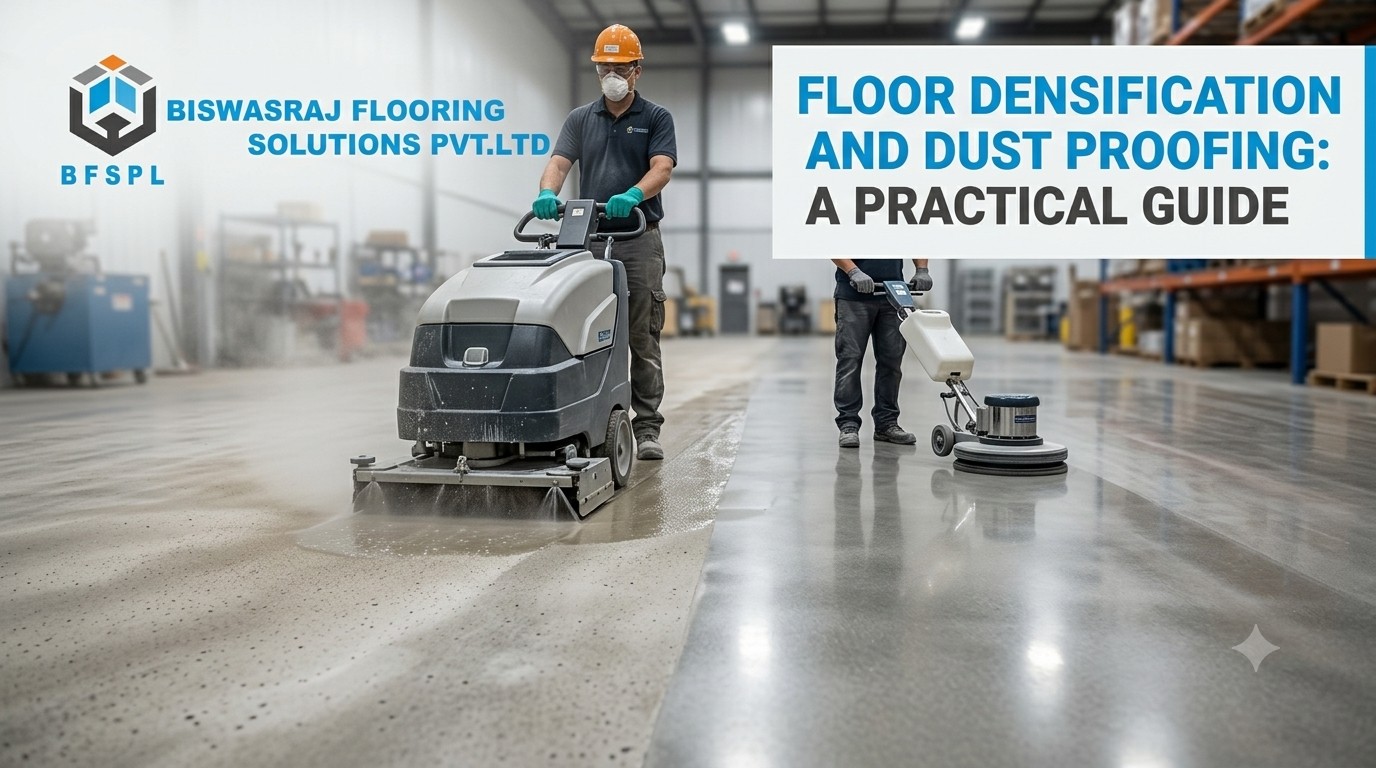
A concrete floor may look strong, but daily forklift movement, material handling, and repeated foot traffic can gradually wear down its surface. Fine concrete dust, loose particles, and increasing cleaning requirements often indicate that the floor needs attention. Floor densification and dust proofing help address these problems by strengthening the concrete surface and reducing dust generation. These treatments are particularly useful in warehouses, manufacturing units, distribution centres, and other facilities that depend on durable floors. However, not every concrete floor requires the same treatment. Some surfaces need chemical hardening, while others may require grinding, crack repairs, protective coatings, or a combination of methods. This guide explains how to assess your concrete floor, understand available treatments, and choose a suitable solution for your facility. Floor densification is a concrete surface treatment that uses a chemical densifier to improve the hardness and density of the existing concrete. Silicate-based densifiers penetrate the concrete and react with available calcium hydroxide to form additional calcium silicate hydrate. This reaction helps create a denser surface with improved resistance to abrasion. Unlike conventional paint, which forms a film over the floor, a densifier works within the concrete surface. It is therefore useful when the objective is to improve the performance of an existing slab without installing an entirely new flooring system. Depending on the condition of the concrete, the treatment can help: Reduce surface dusting caused by weak concrete particles. Improve resistance to everyday abrasion. Make routine cleaning easier. Support the long-term maintenance of existing concrete floors. Prepare suitable surfaces for mechanical polishing. The final results depend on the original concrete quality, surface preparation, chemical selection, and application procedure. Concrete dusting occurs when loose particles gradually break away from the floor's surface. Although concrete is strong under compression, its upper layer can deteriorate when finishing, curing, or maintenance has been inadequate. Several factors can contribute to this problem. Weak surface layers: Poor finishing practices or excessive surface water during finishing can leave a weak layer that wears away easily. Continuous vehicle movement: Forklifts, pallet trucks, and other equipment create repeated friction that gradually abrades exposed concrete. Inadequate curing: Insufficient curing can affect the development of surface strength and durability. Poor maintenance: Oil, dirt, and embedded contaminants can make the floor harder to clean and conceal the actual condition of the concrete. Age and wear: Older floors may develop surface deterioration after years of operational use. Sweeping and vacuuming remove accumulated particles, but they do not strengthen a deteriorating concrete surface. A proper inspection helps determine whether densification, mechanical preparation, or another repair method is appropriate. A suitable treatment begins with identifying the cause of the dusting rather than applying a chemical product immediately. The contractor examines the concrete for dusting, surface weakness, cracks, oil contamination, worn patches, and existing coatings. This assessment helps determine whether the slab is suitable for densification. The floor is cleaned to remove dirt, loose particles, and contaminants. Mechanical grinding may be necessary to remove weak surface material or open the concrete surface for treatment. Cracks, damaged joints, and deteriorated sections should be assessed separately because a densifier does not repair structural defects. The selected chemical is applied according to the product manufacturer's instructions. It penetrates the concrete and reacts with available compounds to strengthen the surface matrix. The application rate and contact time depend on the product and the concrete's porosity. Any excess material or residue is managed according to the product instructions. Depending on the specified finish, the process may include additional cleaning, grinding, polishing, or a compatible protective treatment. The treated surface must be allowed to react and cure for the period specified by the manufacturer. Vehicle movement and regular operations should resume only when the floor is ready for service. A correctly planned floor densification and dust proofing treatment addresses surface deterioration while helping facilities maintain cleaner working areas. Industrial floors experience different demands from residential or light-commercial surfaces. They may need to support frequent equipment movement, repeated loading, and continuous cleaning. The following benefits explain why densification is considered for suitable concrete surfaces. Reducing dust generation helps prevent loose particles from accumulating on products, racks, machinery, and workstations. It also reduces the effort required for routine housekeeping. Densification can improve the hardness of the concrete surface, helping it withstand everyday abrasion. It does not increase the structural load capacity of the entire slab. A denser surface can be easier to maintain than untreated, dusty concrete. Suitable cleaning equipment and neutral cleaning products help maintain the floor. When the existing slab is suitable, treatment can improve its service performance without requiring complete floor replacement. Repairs and maintenance must still be planned according to actual wear. Facilities handling packaged goods, components, and equipment can benefit from reduced surface dust. However, industries with strict hygiene or chemical-resistance requirements may need additional protective systems. Warehouse flooring must accommodate traffic patterns, stored materials, equipment, and daily operating conditions. The right treatment depends on what the floor needs to withstand. Floor densification may be suitable for: Warehouses with sound concrete slabs that generate surface dust. Distribution centres with frequent pallet truck and forklift movement. Storage facilities where regular sweeping creates recurring dust. Manufacturing areas that need improved surface hardness. Existing concrete floors that require easier maintenance without a new decorative coating. For high-rack warehouses, surface hardening alone is not enough. Floor flatness, levelness, joint condition, and load requirements must also meet the needs of the equipment and storage system. If the concrete is badly cracked, delaminated, contaminated, or structurally damaged, repairs or a different flooring solution may be necessary before considering densification. For facilities handling heavy equipment and continuous material movement, explore our warehouse flooring solutions to identify a suitable flooring system for your operational requirements. Before approving a treatment, evaluate the floor and the demands of the facility. Identify the main problem. Determine whether you are dealing with dusting, abrasion, staining, cracks, unevenness, or chemical exposure. Check the concrete condition. A weak surface layer may need grinding or removal before treatment. Structural defects require separate assessment. Understand the traffic load. Consider forklift frequency, wheel types, pallet movement, turning areas, and loading zones. Review cleanliness requirements. Food processing, pharmaceutical production, and sensitive manufacturing may require more than a densified concrete surface. Confirm the required finish. Decide whether a natural concrete appearance is sufficient or whether polishing, line marking, or a protective coating is necessary. Plan maintenance and downtime. Discuss cleaning methods, application conditions, curing time, and when equipment can return to the floor. For technical planning, facility managers can also consult theDPIIT Handbook on Warehousing Standards, which discusses floor surface regularity and the roles of densification, polishing, and resin coatings. Appropriate maintenance helps preserve the condition of the treated surface. Remove loose dust using suitable industrial vacuum equipment or dust-control cleaning methods. Use compatible scrubbers and cleaning products recommended for the floor system. Clean spills promptly, especially oils and chemicals. Inspect joints, cracks, and high-traffic areas regularly. Repair damaged sections before deterioration spreads. Follow the maintenance recommendations provided by the contractor and product manufacturer. Although densification can reduce dusting and improve surface durability, it does not make concrete completely stain-proof, waterproof, or immune to wear. Choosing a flooring contractor involves more than selecting a chemical product. The existing concrete condition, preparation method, operating environment, and required finish all influence the final outcome. BiswasRaj Flooring provides floor densification and dust-proofing services for industrial plants, warehouses, and commercial facilities. The treatment approach should be selected according to the surface condition and operational requirements of each project. Before starting work, discuss the current dusting problem, traffic conditions, damaged areas, cleaning requirements, and expected finish. This helps establish a suitable treatment plan and avoid applying a surface treatment where repairs or another flooring system would be more appropriate. If your concrete floor is producing dust or becoming harder to maintain, arrange a professional assessment to identify the most suitable solution. Floor densification is used to improve the surface hardness and density of suitable concrete floors. It can reduce dusting, improve abrasion resistance, and make routine cleaning easier in warehouses, factories, and commercial facilities. A properly selected and applied densifier can substantially reduce dusting caused by surface deterioration. However, results depend on concrete quality, preparation, and the cause of the problem. Severely damaged concrete may require repairs or removal of weak material. Yes, it can be suitable for existing warehouses when the concrete slab is structurally sound and its surface condition is appropriate for treatment. An inspection helps identify any necessary grinding, repairs, or alternative protection. Densification strengthens the concrete surface through a chemical reaction. Dust proofing describes the objective of reducing concrete dust and may involve densification, surface preparation, or other compatible treatments. Neither option is universally better. Densification is suitable for hardening sound concrete and reducing dust, while epoxy is useful when a specified protective coating, coloured finish, or additional chemical resistance is required. No. Densification can reduce surface porosity and liquid absorption, but it should not be treated as a complete waterproofing system. Dedicated waterproofing or chemical-resistant protection may be needed for particular environments. The service life varies according to concrete quality, traffic, treatment selection, application, and maintenance. Regular inspection and timely repairs help preserve the floor's performance. Yes. Suitable concrete floors can be mechanically ground and polished as part of a planned system. The required finish and sequence should be confirmed before work begins. Concrete dust, surface wear, and increasing maintenance demands can affect the efficiency of industrial facilities. The right treatment starts with understanding the cause of the problem and assessing the existing slab. Floor densification can help strengthen suitable concrete surfaces, reduce dust generation, and simplify maintenance. For warehouses and industrial facilities, the best solution depends on traffic conditions, cleanliness requirements, floor damage, and the desired finish. Contact BiswasRaj Flooring to discuss your concrete floor condition and identify a suitable treatment for your facility.How Can Floor Densification and Dust Proofing Improve Concrete Floors?
What Is Floor Densification?
Why Do Concrete Floors Produce Dust?
How Does Floor Densification and Dust Proofing Work?
1. Inspect the Existing Floor
2. Prepare the Surface
3. Apply the Appropriate Densifier
4. Remove Residue and Complete the Treatment
5. Allow the Floor to Cure
What Are the Benefits for Industrial Flooring?
Reduced Concrete Dust
Improved Surface Hardness
Easier Routine Cleaning
Better Long-Term Maintenance
Support for Operational Cleanliness
When Is Densification Suitable for Warehouse Flooring?
How Do You Choose the Right Concrete Floor Treatment?
How Can You Maintain a Densified Concrete Floor?
Why Choose BiswasRaj Flooring for Floor Treatment?
Frequently Asked Questions
1. What Is Floor Densification Used For?
2. Does Concrete Densification Stop Dust Completely?
3. Is Floor Densification Suitable for Existing Warehouses?
4. What Is the Difference Between Densification and Dust Proofing?
5. Is Densification Better Than Epoxy Flooring?
6. Does Floor Densification Make Concrete Waterproof?
7. How Long Does a Densified Concrete Floor Last?
8. Can a Densified Concrete Floor Be Polished?
Need Reliable Floor Densification and Dust Proofing for Your Facility?