

How To Choose The Right Epoxy Flooring For Your Facility?
 05 Oct 2026
How To Choose The Right Epoxy Flooring For Your Facility?
- Posted by Nagananda Udupa
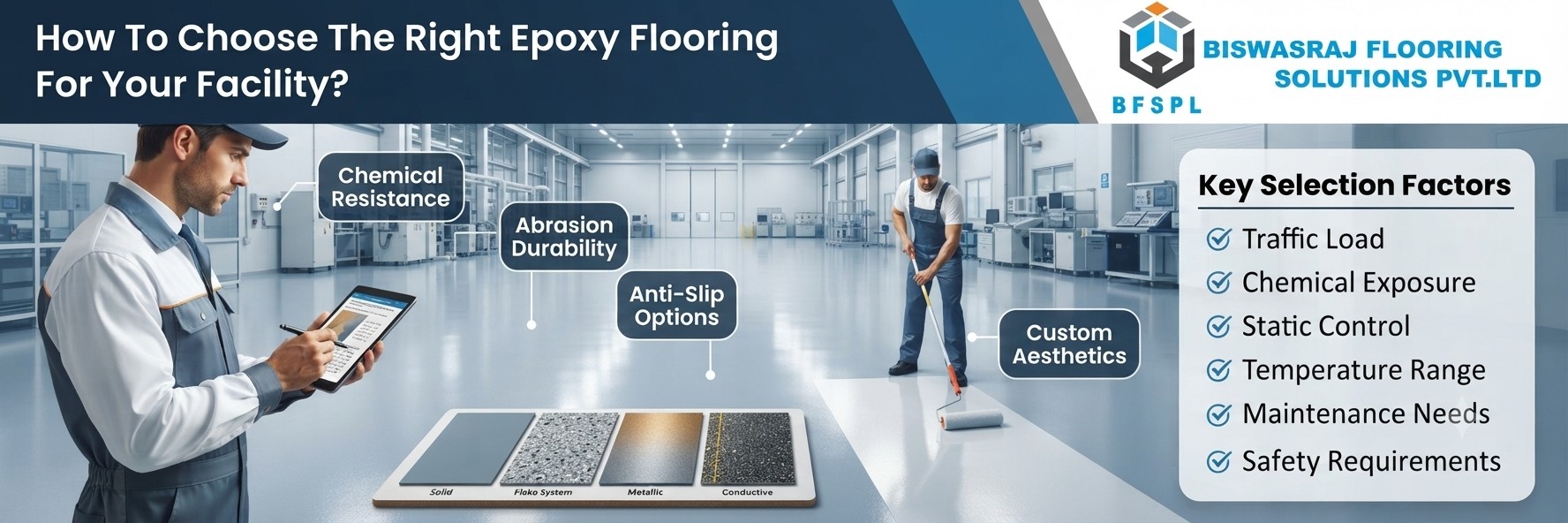
Choosing a flooring system for an industrial, commercial, warehouse, or utility space involves more than selecting a surface that looks clean. The floor must withstand the conditions created by vehicles, machinery, chemicals, moisture, heavy loads, foot traffic, and daily operations. Epoxy Flooring can provide a durable and easy-to-maintain surface when the system is selected according to the site's actual requirements. However, not every facility needs the same thickness, finish, or installation method. Before choosing a system, consider the type of traffic, expected load, exposure to chemicals, moisture conditions, required finish, maintenance needs, and existing concrete conditions. These factors help you determine which flooring solution is suitable for the application. The first step is to understand how the floor will be used every day. A warehouse with forklifts has different requirements from a showroom, manufacturing unit, parking area, or commercial kitchen. Consider these factors before making a decision: Type and frequency of traffic Weight of vehicles and equipment Exposure to chemicals or oils Moisture and water exposure Existing concrete condition Required slip resistance Cleaning and maintenance requirements Expected service life Appearance and colour requirements Available installation time Heavy industrial environments may require a more robust system than areas with only pedestrian traffic. Similarly, locations exposed to oils or chemicals need a surface that can tolerate the expected substances. A professional site assessment can help identify these conditions before installation begins. Traffic is one of the most important factors when selecting a flooring system. A facility used mainly by pedestrians may not require the same specification as a warehouse where forklifts operate continuously. Repeated movement from forklifts, pallet trucks, heavy equipment, and vehicles can place considerable stress on the surface. For high-traffic areas, the flooring system should be selected according to the expected mechanical load and frequency of movement. The concrete substrate must also be strong enough to support the intended application. If the floor is exposed to impact or concentrated loads, simply applying a thin surface layer may not provide the performance required. Understanding traffic patterns before installation helps you avoid choosing a system based only on appearance or initial cost. A heavy-duty Epoxy Floor Coating may be considered when a facility experiences demanding operating conditions. Examples include manufacturing areas, workshops, warehouses, loading zones, and industrial production spaces where the floor is exposed to repeated vehicle movement or equipment use. The required system depends on the specific conditions. Important considerations include coating thickness, substrate preparation, resin system, aggregate selection, curing requirements, and expected mechanical exposure. A heavier system may provide greater resistance to wear, but the correct specification should be based on the actual site rather than simply choosing the thickest available option. Professional assessment is particularly important when the floor will be exposed to heavy machinery or frequent forklift traffic. Some industrial environments regularly handle oils, solvents, cleaning chemicals, acids, alkalis, or other substances. In these situations, chemical resistance should be considered before selecting an Epoxy Flooring system. Different resin formulations can have different levels of resistance to specific chemicals. Start by identifying the substances that may come into contact with the floor. Consider their concentration, temperature, exposure duration, and frequency of spills. For example, a workshop dealing with lubricants may have different requirements from a manufacturing facility using aggressive chemicals. Do not select a flooring system solely because it is advertised as chemical-resistant. The product specification should be checked against the actual chemicals used at the site. Facilities such as food-processing areas, workshops, hospitals, laboratories, and commercial spaces may require frequent floor cleaning. A properly installed Epoxy Floor can provide a relatively seamless surface that is easier to clean than damaged or heavily jointed concrete. However, good performance depends on proper substrate preparation and installation. The surface finish should also match the cleaning process. Smooth surfaces may be easier to clean, while textured finishes can provide additional slip resistance where required. Cleaning chemicals should also be compatible with the installed system. Using unsuitable cleaning products repeatedly may affect the appearance or performance of the surface. A floor that becomes slippery when wet can create a safety concern. Areas exposed to water, oil, cleaning liquids, or other contaminants may require a slip-resistant finish. The level of texture should be selected according to the operating environment and cleaning requirements. For example, an industrial workspace exposed to frequent spills may need a different surface texture from a dry office corridor. When specifying an Epoxy Floor Coating, discuss both slip resistance and maintenance. Excessive texture can make cleaning more difficult, while insufficient texture may not provide the required traction. The right balance depends on the facility's actual working conditions. The condition of the concrete underneath the flooring system has a major influence on the final result. Surface preparation may include mechanical grinding, shot blasting, crack treatment, cleaning, or other suitable preparation methods depending on the condition of the floor. Applying a new coating over a contaminated or poorly prepared surface can lead to adhesion problems, peeling, bubbling, or premature deterioration. This is why substrate preparation should be treated as an important part of the flooring project rather than a minor preliminary step. Before applying an Epoxy Flooring system, inspect the substrate for cracks, oil contamination, moisture, weak concrete, uneven areas, and previous coatings. The BIS standard for epoxy resin floor toppings provides relevant guidance on laying epoxy resin floor toppings. Moisture can affect the performance of resin-based flooring systems. Concrete may contain moisture even when the surface appears dry. Moisture transmission from the substrate can contribute to blistering, delamination, or other installation problems if it is not properly assessed. Before installing an Epoxy Floor, the substrate should be evaluated according to the requirements of the selected system. If moisture is identified, the appropriate corrective approach should be determined before proceeding. Depending on the site, this may involve moisture management, substrate treatment, or selecting a system designed for the particular condition. Skipping this assessment can create problems after installation. Not every project has purely functional requirements. Commercial buildings, showrooms, reception areas, retail spaces, and offices may also require an attractive floor. Decorative systems can provide a clean and professional appearance while still offering useful performance characteristics. Industrial environments, on the other hand, often prioritise durability, slip resistance, chemical resistance, cleaning, and operational performance. An Epoxy Floor Coating can be specified with different colours, finishes, and surface textures depending on the system and application. The appearance should therefore be considered alongside performance rather than treated as the only selection factor. Different facilities have different priorities. Warehouses: Forklift traffic, pallet movement, impact, dust control, and maintenance are key considerations. Manufacturing units: Mechanical wear, chemicals, machinery, cleaning, and operational safety may influence the specification. Workshops: Oil exposure, vehicle movement, tools, impact, and cleaning requirements should be considered. Commercial spaces: Appearance, cleanliness, pedestrian traffic, and maintenance may have greater importance. Parking and utility areas: Vehicle movement, moisture, abrasion, and slip resistance can influence the selection. This approach helps you choose Epoxy Flooring based on actual operating conditions instead of selecting a generic solution for every application. Several common mistakes can reduce the performance of a flooring project. Choosing a system based only on price is one of them. A lower initial cost may not represent the best value if the system is unsuitable for the operating environment. Ignoring substrate preparation is another major mistake. Even a high-quality Epoxy Floor Coating can perform poorly when applied over contaminated, weak, or improperly prepared concrete. You should also avoid selecting a system without considering chemical exposure, traffic, moisture, and slip resistance. Finally, do not assume that every epoxy product is identical. Resin type, formulation, thickness, preparation requirements, curing conditions, and application methods can vary. A professional assessment allows the flooring requirement to be considered before installation begins. The assessment can examine the existing concrete, traffic conditions, moisture, chemical exposure, expected loads, drainage, surface condition, and operational requirements. This information can then be used to recommend an appropriate flooring specification. For a deeper understanding of system selection and applications, refer to our industrial epoxy flooring guide before finalising your flooring requirements. For industrial projects, planning should also consider installation access, curing time, production schedules, and the areas that need to remain operational. A properly planned Epoxy Flooring project can reduce avoidable installation problems and help the finished surface meet the facility's practical requirements. It can be suitable for many industrial environments, but the system should be selected according to traffic, load, chemical exposure, impact, and substrate conditions. Heavy-duty applications may require a specially specified system. The service life depends on the system, installation quality, substrate condition, traffic, chemical exposure, maintenance, and operating environment. Proper specification and preparation can improve long-term performance. An Epoxy Floor Coating can be suitable for warehouses where the system is designed for the expected forklift traffic, loads, abrasion, and operating conditions. It can be applied over suitable existing concrete after proper inspection and preparation. Damaged, contaminated, weak, or moisture-affected areas may require corrective treatment first. Regular cleaning and appropriate maintenance can help preserve the floor's appearance and performance. The maintenance method should follow the requirements of the installed system. It can be designed with a textured or aggregate-based finish to improve slip resistance. The appropriate texture depends on the area's conditions, including moisture and contamination. Choosing the right flooring system requires more than comparing product prices or selecting a colour. You need to consider traffic, mechanical loads, chemicals, moisture, cleaning, slip resistance, substrate condition, and the purpose of the facility. A properly specified Epoxy Flooring system can provide a durable and practical surface for many industrial and commercial applications. The right Epoxy Floor Coating should be selected according to the environment rather than using the same specification for every project. If you are planning a new industrial or commercial Epoxy Floor, assess the existing concrete and operating conditions first. A professional flooring assessment can help you select a system that matches your facility's performance requirements. For facility-specific flooring requirements, explore BiswasRaj Flooring Solutions to understand suitable industrial and commercial flooring options. Need help choosing the right epoxy flooring for your facility? Contact BiswasRaj Flooring Solutions for professional guidance and flooring solutions.What Factors Should You Check Before Choosing Epoxy Flooring?
How Does Traffic Affect Epoxy Flooring Selection?
When Is A Heavy-Duty Epoxy Floor Coating Necessary?
How Should You Choose Flooring For Chemical Exposure?
Can Epoxy Flooring Help In Areas With Frequent Cleaning?
How Important Is Slip Resistance?
What Should You Check About The Existing Concrete?
How Does Moisture Affect Epoxy Floor Installation?
Should You Choose A Decorative Or Industrial Finish?
How Can You Match The Flooring System To Different Facilities?
What Mistakes Should You Avoid When Selecting Epoxy Flooring?
How Can Professional Flooring Assessment Improve The Result?
Frequently Asked Questions
Is Epoxy Flooring Suitable For Heavy Industrial Areas?
How Long Does An Epoxy Floor Last?
Is Epoxy Floor Coating Suitable For Warehouses?
Can Epoxy Flooring Be Applied Over Old Concrete?
Does An Epoxy Floor Require Regular Maintenance?
Is Epoxy Flooring Slip Resistant?
How Can You Choose The Right Epoxy Flooring System?
How Can You Get Expert Epoxy Flooring Guidance?