

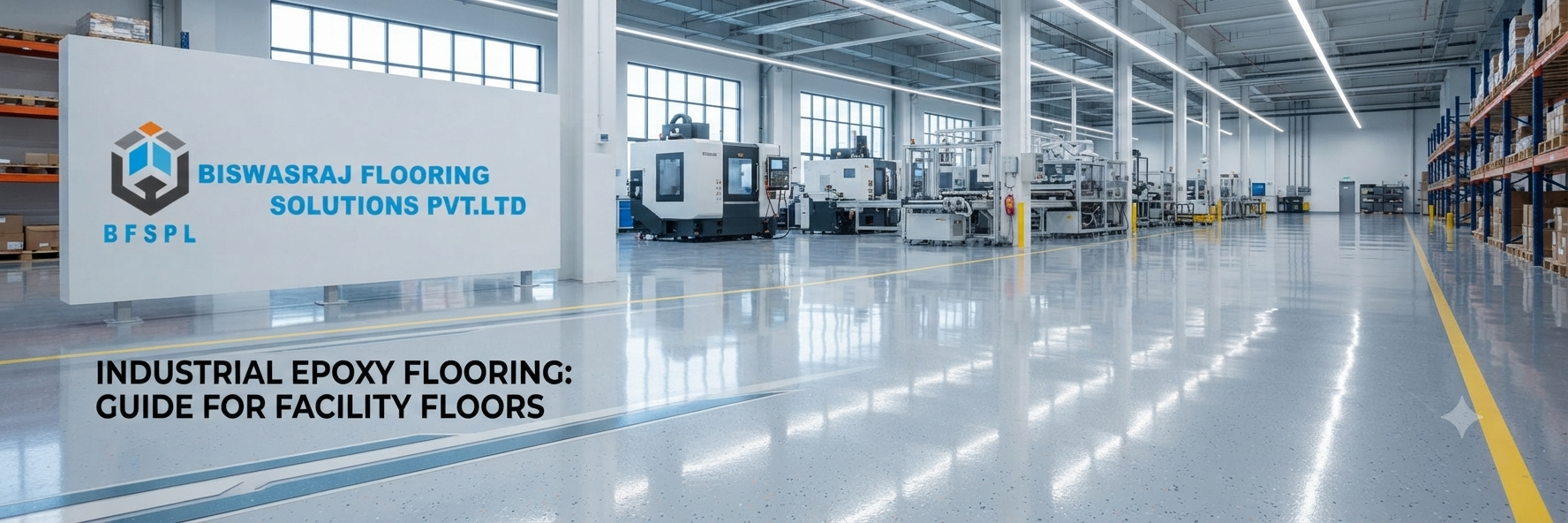
Industrial Epoxy Flooring: Guide For Industrial Facility Floors
 28 Sep 2026
Industrial Epoxy Flooring: Guide For Industrial Facility Floors
- Posted by Nagananda Udupa
Factories, warehouses, workshops, production units, and commercial facilities require floors that are capable of withstanding additional demands beyond pedestrian traffic. Forklifts, machinery, oil spills, chemicals, dust, impact, and continuous foot traffic can put a significant stress on an ordinary concrete floor.
Industrial epoxy flooring offers the benefit of protecting an underlying concrete surface while also improving its overall condition and ease of use. The correct system can help industrial facilities meet the demands of their operating conditions while also providing the benefit of a more uniform and easier to maintain floor.
However, it is necessary to understand that an epoxy system is not a singular entity. The coating system, thickness, surface preparation, methods of application, and working conditions all play a role in determining the final outcome.
What Is Industrial Epoxy Flooring?
Industrial epoxy flooring is a resin based floor system that is generally applied to a prepared concrete surface. Epoxy resin and hardener are used to create a bonded surface that has the potential to offer increased protection to an underlying floor from regular industrial use.
Depending on the requirements an epoxy system can be selected to accommodate vehicle movement, heavy foot traffic, chemical exposure, abrasion, dust retention, ease of cleaning, and more.
A prepared concrete floor should be evaluated for its suitability before applying an epoxy coating since cracks, moisture, surface contamination, poor concrete quality, and irregular areas on the surface can negatively impact the eventual outcome.
TheBureau of Indian Standards guidance on epoxy resin floor toppings also provides a relevant reference for epoxy floor installation practices.
Why Do Industrial Floors Require Epoxy Coating?
Industrial floors often have to deal with conditions that are particularly difficult for an exposed concrete floor to withstand over time.
An appropriate epoxy system can offer protection by forming a continuous surface over a prepared floor which can reduce dusting and offer a cleaner and simpler surface that is easier to clean.
In facilities where housekeeping is of particular importance a smooth coated surface can also help with ensuring easier removal of dirt or other undesirable materials. The actual performance of a coating depends on the system that is selected according to the conditions that a floor is exposed to. Industrial environments can have a variety of requirements for their flooring system. An epoxy coating can be considered for use in a number of different applications. Manufacturing facilities can have a range of requirements due to the presence of machinery, material flow, exposure to oil, and pedestrian and vehicle traffic. An appropriately specified epoxy system can accommodate a range of conditions experienced in a factory including its production floor, walkways, storage areas, and other suitable surfaces. Warehouses and storage areas often experience continuous pedestrian and vehicle traffic. A smooth floor surface can aid in ensuring easier housekeeping and organization when the underlying concrete and coating system are suitable for the application. Automobile workshops and service areas can involve exposure to greases and oils, chemical exposure, and tools and machinery. A suitable coating system can serve to protect the concrete surface and aid in easier cleaning routines. Industrial epoxy systems can also be considered for utility rooms, service areas, equipment rooms, and selected commercial spaces that require a durable and easy to maintain floor. The selection of an appropriate system depends on the condition of the floor in addition to the intended use. Different epoxy flooring systems can offer a range of benefits. An epoxy coating system can generally be considered for surfaces with moderate traffic and suitable underlying conditions. It can provide a protective layer while also improving the general aesthetics of the surface. A self-leveling system can be considered when a smooth and generally uniform surface needs to be achieved. Heavy duty systems should be considered for applications where a thicker coating, higher abrasion resistance, and increased overall durability is required. Some applications require additional slip resistance due to exposure to water, oils, cleaning agents, and more. An anti-slip finish can be considered when such a requirement needs to be accommodated. The process of preparing and installing the system starts well ahead of the actual coating application. This is because surface preparation plays a vital role and the coating requires a suitable surface to achieve optimum performance. The underlying concrete is generally inspected for any cracks, weak spots, contamination, moisture concerns, and other issues. Loose material, latitude, grease, and other contaminants need to be removed from the surface. Mechanical preparation may be done depending on the condition of the surface. Damaged areas and suitable cracks on the concrete floor are repaired before applying the coating. The method of preparation depends on the nature of the issue. A suitable primer is generally applied to achieve optimum adhesion and bonding between the coating system and the underlying surface. The coating is applied according to the specified requirements. The number of coats and overall material requirement depend on the system that is being used. The newly applied coating needs sufficient time to cure before allowing normal traffic. The surface is finally inspected to confirm its general condition and other project requirements. The cost of an epoxy flooring project cannot generally be calculated on a cost per square foot basis. A number of project specific factors can affect the final bill. Floor Condition: Damaged or contaminated concrete may require additional steps for surface preparation. Surface Preparation: Grinding, cleaning, crack repairs, and other preparation work can also be a factor. Epoxy System: Different resin systems, thicknesses, finishes, and performance requirements have different material requirements. Floor Area: Larger projects require more material and labor as compared with smaller jobs. Site Conditions: Access, existing machinery, operating schedule, and other requirements can impact the installation process. Performance Requirements: Chemical resistance, heavy traffic, anti-slip properties, and other requirements may add to the final bill. For this reason an on-site survey and project-specific quotation is more beneficial than an industry standard price per square foot. Selecting an epoxy floor should start with the manner in which a facility is operated. Ask yourself these questions before choosing a system: How much daily traffic does the floor receive? Are forklifts or heavy vehicles used? Is the floor exposed to oil or chemicals? Is slip resistance required? Does the area need frequent washing? Are there existing cracks or damaged sections? Is the floor exposed to heavy impact? The answers will guide the choice of preparation method, coating specification, thickness, and finish. A warehouse with regular movement of forklifts may have different requirements than a low traffic service room. Treating both in exactly the same manner will result in an unsuitable specification. Regular cleaning and maintenance are essential to preserving the appearance and performance of an epoxy coated surface. Make sure to remove dust and loose debris from the floor on a regular basis to ensure abrasive particulates do not remain on the surface. Any spills should be attended to in a timely manner particularly when oils or chemicals are involved. Cleaning methods should be suitable for the coating system that has been selected. Avoid leaving areas of damage untreated when they are exposed to continuous traffic or moisture. Periodic inspections can also help to identify wear, impact damage, cracks, and other areas that may need repair. Good housekeeping is especially beneficial for factories and warehouses due to the tendency of oil, dust, and other materials to accumulate in the area affecting both the floor and working conditions. Industrial epoxy flooring can be considered when an existing concrete floor needs additional surface protection, easier clean ability, and a better overall finish for the purpose of meeting industrial operating conditions. It can be particularly useful for factories, warehouses, workshops, production areas, and other similar spaces where concrete is exposed to regular foot and vehicle traffic. However, it should not be applied to every concrete floor without consideration. Moisture, substrate condition, structural issues, and expected loads should be evaluated first. A coating can protect a suitable substrate but it cannot replace the need to address serious underlying problems with the concrete. BiswasRaj Flooring Solutionscan help provide flooring solutions for industrial and commercial requirements. An appropriate flooring system can be chosen based on factors such as site conditions, traffic, usage, surface condition, and performance requirements. For an epoxy project proper preparation is as important as the coating itself. An on-site survey can help identify the required preparation and flooring specification for the particular application. If your factory, warehouse, workshop, or commercial facility requires a durable floor surface, discuss the site requirements with a flooring professional before selecting the system. Yes. Epoxy systems can be suitable for warehouses depending on the traffic, forklift movement, substrate condition, and other operating requirements. The service life depends on the epoxy system, substrate preparation, traffic, maintenance, impact, chemicals, and other site conditions. Proper specification and preparation can contribute towards better performance. Yes, provided the existing concrete is suitable and properly prepared. Existing contamination, moisture, cracks, weak concrete, and other problems should be evaluated before application. It can be, but the flooring system should be selected according to the machinery, loads, impact, traffic, and operating conditions. A standard coating may not be suitable for every application. Yes. Regular cleaning, spill removal, inspection, and timely repairs can help maintain the floor and service life. Industrial floors must be able to withstand the conditions they are exposed to as part of regular operations. From forklifts and machinery to spills and foot traffic the flooring system needs to be selected according to the demands of the facility. Industrial epoxy flooring can provide a protective, smooth, and easier to maintain surface when the underlying substrate is suitable and the system is properly specified and installed. Before selecting an epoxy system evaluate the existing concrete, traffic levels, exposure conditions, maintenance requirements, and performance. This allows you to choose a flooring solution according to the site requirements instead of selecting one based only on aesthetics or cost. If you are planning industrial epoxy flooring for your factory, warehouse, workshop, or commercial facility,contact BiswasRaj Flooring Solutions to discuss your flooring requirements and project needsWhere Can Industrial Epoxy Flooring Be Used?
Factories And Manufacturing Units
Warehouses And Storage Areas
Workshops And Service Areas
Commercial And Utility Areas
What Are The Main Types Of Industrial Epoxy Systems?
Epoxy Floor Coating
Self-Leveling Epoxy
Heavy-Duty Epoxy Flooring
Anti-Slip Epoxy Flooring
How Is Industrial Epoxy Flooring Installed?
Floor Inspection
Surface Preparation
Crack And Surface Repairs
Primer Application
Epoxy Application
Curing And Final Inspection
What Factors Affect The Cost Of Industrial Epoxy Flooring?
How Do You Choose The Right Epoxy System?
How much downtime is available for installation?
What Maintenance Does An Epoxy Floor Require?
When Should You Consider Industrial Epoxy Flooring?
How Can BiswasRaj Help With Industrial Flooring?
Frequently Asked Questions
Is Industrial Epoxy Flooring Suitable For Warehouses?
How Long Does An Epoxy Floor Last?
Can Epoxy Be Applied Over An Existing Concrete Floor?
Is Epoxy Flooring Suitable For Heavy Machinery?
Does Epoxy Flooring Require Maintenance?
How Can Industrial Epoxy Flooring Support Your Facility?
How Can You Discuss Your Industrial Flooring Requirements?