


Concrete Floor Coating: Cost, Types, Application and Care
 01 Sep 2026
Concrete Floor Coating: Cost, Types, Application and Care
- Posted by Nagananda Udupa
Concrete floors are a popular choice for factories, warehouses, workshops, garages and commercial premises. The heavy traffic, forklifts, heavy equipment, oil, chemicals, humidity, and frequent cleaning can take a toll on an exposed concrete floor.
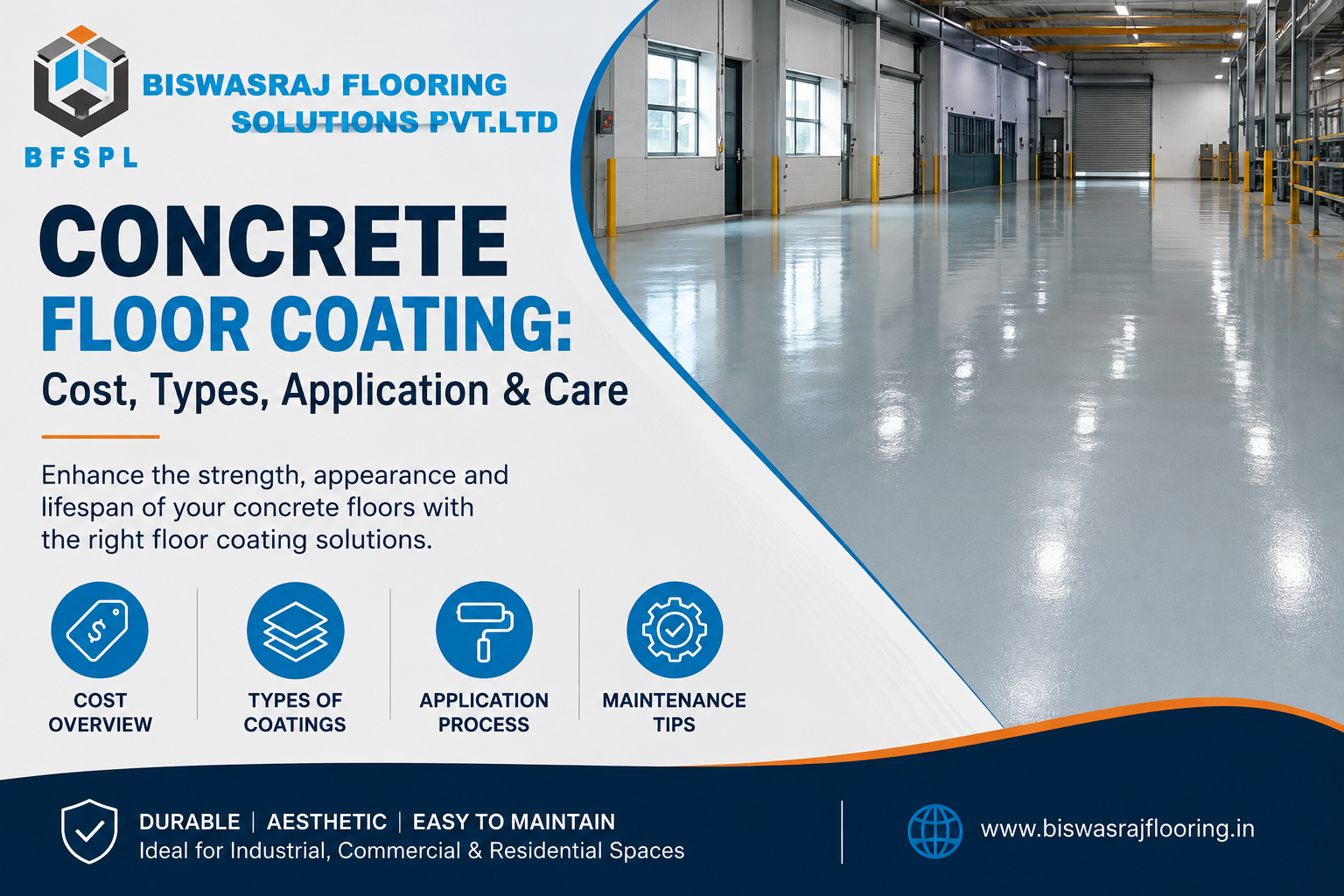
Concrete floor coating offers an additional protective layer over a suitably prepared concrete floor. Depending on the type of chosen system it can offer improved resistance to abrasion, easier cleaning, less surface dust and a more complete appearance.
The selection of the coating however involves more than choosing the material. Consideration should be given to floor condition, traffic, load, chemical exposure, moisture and maintenance prior to installation.
What Is Concrete Floor Coating?
Concrete floor coating is a protective layer that is applied to an appropriately prepared concrete surface. The coating is used to offer additional protection and an improved appearance to the concrete substrate.
Concrete floor coatings can be used in:
Factories and manufacturing units
Warehouses and logistics facilities
Automobile workshops
Garages
Engineering units
Commercial facilities
Storage areas
Industrial workspaces
The type of coating should be selected according to the type of traffic that will be experienced. A floor that will be exposed mainly to pedestrians will have different requirements to a floor that will be subjected to forklifts, vehicles or machinery.
Why Coat a Concrete Floor?
While concrete can be a strong and durable material, there are several operating conditions that can lead to its deterioration. With the right coating a surface can be offered additional protection and improved functionality.
Protection Against Wear
The repetitive movement of forklifts, vehicles and machinery can lead to surface abrasion. The right coating can offer an additional barrier to the effects of normal traffic.The repetitive movement of forklifts, vehicles and machinery can lead to surface abrasion. The right coating can offer an additional barrier to the effects of normal traffic.
Easier Cleaning
A prepared coated surface can be easier to clean than an aged, pitted or deteriorated concrete floor. This can be important in a number of facilities where routine cleaning is necessary.
Reduced Surface Dust
Deteriorating concrete surfaces can become a source of dust with regular traffic. Depending on the system selected, coating or concrete treatment can be used to control surface dust.
Better Appearance
A coated surface can offer a more uniform and better appearance, contributing to an overall improved and organized environment.
Additional Resistance
Depending on the coating selected, the floor can be offered additional resistance to abrasion, staining, moisture or selected chemicals.
Types of Concrete Floor Coating
Depending on the environment, different types of coating will be required. The system that is selected will determine the operating conditions that it can resist.
Epoxy Floor Coating
Epoxy is a common type of coating that is used for industrial and commercial concrete floors. When applied correctly it can offer a hardened surface that is seamless in appearance.It is a commonly considered treatment for warehouses, workshops, production areas and garages. However the appropriate type of epoxy system should be determined by traffic, moisture, chemical exposure, substrate condition and performance expectations.
Polyurethane Floor Coating
Polyurethane, commonly referred to as PU, is another coating considered for demanding environments. Depending on the formulation the system can offer resistance to abrasion and flexibility.
It can be considered for applications where the operation conditions are different to standard expectations for an epoxy system.
Heavy-Duty Resin Coating
Where forklifts, heavier equipment or impact is experienced the surface might require a more robust resin system.
The performance of such a system can depend on coating thickness, substrate preparation, reinforcement and proper installation.
Concrete Densification and Surface Treatment
Not all concrete floors require a resin coating. Where the requirements are for improved surface hardness and reduced dusting a suitable concrete densification or hardening treatment can be considered.
Concrete Floor Coating Cost
There is no standard cost applicable to all concrete floor coating projects. The cost of any project will depend on a number of factors relating to the floor and the system that is selected.
Cost Factors Impact on Cost
Coating type Different systems will have different material costs
Floor condition Damaged floors might require additional preparation
Surface preparation Grinding, cleaning and repairs will affect project requirements
Coating thickness Thicker systems will require more material
Floor area Project size will affect material and labour requirements
Site conditions Access and operating restrictions can affect installation
Finish Anti-slip finishes, colours and markings can vary specifications
For this reason a site assessment is a more reliable method for determining costs than a general per square foot price
Concrete Floor Preparation Before Coating
The concrete floor preparation is one of the most critical aspects of any coating project. Even a high quality coating can fail prematurely when applied to a poor substrate.
The preparation process may involve:
1. Inspection: Inspection of cracks, damaged areas, contamination and existing coatings.
2. Cleaning: Removal of dust, dirt, oil, grease and loose materials
3. Mechanical preparation: Grinding or other suitable methods to create the required surface profile
4. Repairs: Assessment and repair of cracks, holes and other damaged substrate
5. Moisture assessment: Moisture considerations prior to coating selection and application
Following these steps will ensure the substrate is in a suitable condition for coating application.
Concrete Floor Coating Application Process
The application process will vary depending on the coating type, however a typical project can involve several phases.
Surface Preparation
The concrete will be cleaned and appropriately prepared according to the coating requirements.
Primer Application
A suitable primer may be applied to improve adhesion and prepare the substrate for the subsequent coating.
Coating Application
The designated base coat, intermediate layers and topcoat will be applied according to the system specifications and coating thickness.
Curing
The floor will then be allowed to cure for the designated time before returning to service. The curing time will depend on the system and environmental conditions.
How to Choose the Right Industrial Floor Coating
The selection of an industrial floor coating should be based on the operating conditions of the facility.
Traffic and Load
Will the floor be subjected to pedestrians, pallet trucks, forklifts, vehicles or machinery?
Chemical Exposure
Are there oils, solvents, cleaning chemicals or other substances that will be present? The selected coating should be compatible to the expected exposure.
Moisture
Moisture can affect the performance of some coating systems, therefore the existing conditions should be considered.
Slip Resistance
Where the floor will be exposed to water, oil or regular washing an appropriate anti-slip finish should be considered.
Maintenance Requirements
How often will the floor be cleaned and with what products?
Concrete Floor Coating for Warehouses and Factories
Warehouses and factories can involve significantly different demands on a concrete floor.
Warehouses can experience forklift and pallet traffic as well as concentrated storage loads. Factories can involve machinery, oils, chemicals, production materials and regular cleaning. The appropriate industrial flooring solution should be selected for each facility and even within the same building different areas might require different treatment.
Common Concrete Floor Coating Problems
Failure of a coated floor can occur where the coating or application is not appropriate for the floor conditions.
Common problems include:
Peeling
Blistering
Bubbling
Cracking
Delamination
Poor adhesion
Uneven finish
Premature wear
Poor preparation, moisture, contamination, inappropriate product selection and incorrect curing can contribute to such problems.
Where an existing coating has failed, it is important to determine the cause before applying a new coating.
How to Maintain a Concrete Floor Coating
Proper maintenance will extend the service life of a coated concrete floor.
- Clean regularly: Removing surface dust and dirt helps preserving the coating integrity. Remove oil and chemical spills promptly
- Regular inspection: Of forklift routes and high traffic areas should be part of any maintenance schedule
- Repair damaged surfaces: At an early stage
- Suitable cleaning products: For the installed coating should be used
- Avoid practices: That might unnecessarily damage the surface.
When Should a Concrete Floor Be Recoated?
Recoating can be considered where the existing surface has sustained widespread wear, peeling, loss of adhesion or other deterioration.
Before applying a new coating the existing floor should be inspected. If the original failure was related to moisture, poor preparation or substrate damage these issues should be addressed.
Depending on the existing condition the required solution can range from local repair, mechanical preparation, removal of the existing coating or complete refurbishment.
Frequently Asked Questions
What is concrete floor coating?
Concrete floor coating is a protective layer applied over a properly prepared concrete surface in order to improve its protection, cleanability and resistance to selected forms of wear and exposure.
How much does concrete floor coating cost?
The coating type, floor condition, surface preparation, thickness, floor area, site conditions and required finish play a role in determining the cost. A site assessment is recommended for cost determination.
Is epoxy suitable for concrete floors?
Yes. Epoxy can be suitable for a number of indoor industrial and commercial applications where a hard, seamless and maintainable floor is required.
Can coating be applied over old concrete?
Yes, where the existing concrete is suitable and properly prepared. Cracks, contamination, weak areas, moisture and existing coatings should be assessed prior to application.
How long does concrete floor coating last?
The service life of a coating is dependent on the coating system, the substrate, installation, traffic, chemical exposure and maintenance. Specification and maintenance will influence its longevity.
Conclusion
Concrete floor coating can offer significant protection for concrete floors exposed to regular traffic, machinery, abrasion, staining and other demanding environments. Epoxy, polyurethane and heavy-duty resin coating can be selected to meet the requirements of different operations, while concrete densification and other industrial flooring solutions might be required in other applications.
Selection of the coating material is only one aspect of any coating project. The inspection, preparation, repair, application and curing processes are equally important.
For any business considering industrial floor coating or protection for concrete floors, assessment of actual operating conditions is the first step towards determining the most suitable solution. BiswasRaj Flooring Solutions can help evaluate industrial and commercial flooring requirements and determine an appropriate system according to site needs.