


Best Jointless Flooring Solutions for Industrial Spaces
 29 May 2026
Best Jointless Flooring Solutions for Industrial Spaces
- Posted by Gowtham K G
BiswasRaj Flooring, Factory and warehouse floors go through heavy pressure every single day. From forklifts and machinery movement to moisture and heavy loads, damaged flooring can quickly become a costly problem. Cracks, uneven surfaces, and dust buildup can slow down operations and create safety issues for workers.
That’s one reason why many industries now prefer Jointless Flooring for modern industrial spaces. A smooth and continuous flooring surface not only looks better but also performs better under heavy industrial conditions.
Table of Contents
What is Jointless Flooring?
Why Jointless Flooring is Important
Types of Flooring Services Available
Common Situations to Use These Services
Benefits of Professional Flooring Services
Pricing Table
Areas Covered
How to Choose the Best Flooring Service
Safety Tips
FAQs
Conclusion
What is Jointless Flooring?
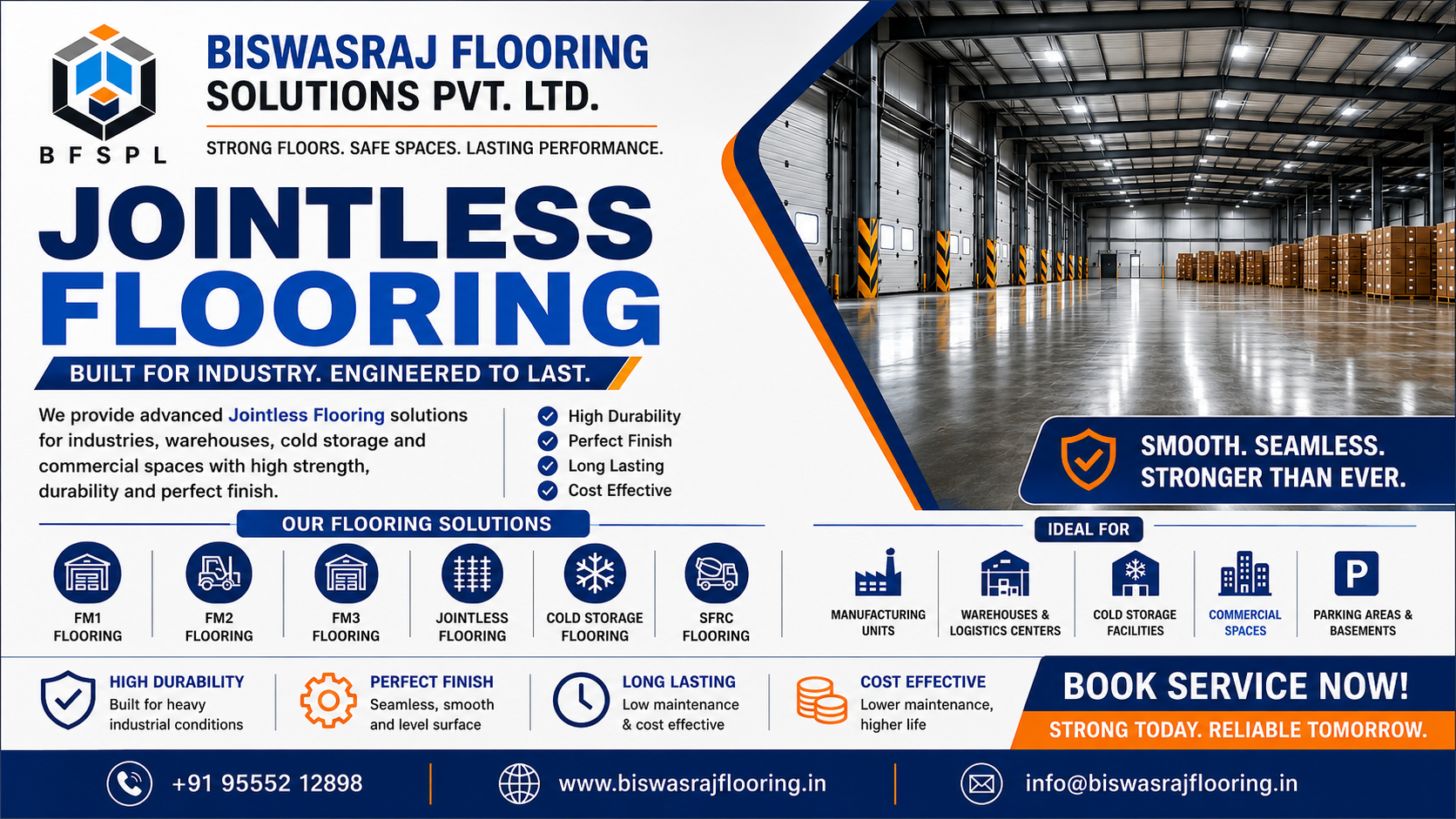
Jointless Flooring is a flooring system that creates a smooth and continuous concrete surface without visible joints or gaps. Traditional concrete floors often develop cracks and damaged edges because of constant industrial movement. Jointless flooring helps reduce these issues and improves floor durability.
This type of flooring is widely used in places where heavy machinery, forklifts, and continuous operations are common.
You can usually find Jointless Flooring in:
Warehouses
Industrial factories
Logistics centers
Manufacturing plants
Commercial buildings
Cold storage units
Many industries also combine Jointless Flooring with FM1 Flooring, FM2 Flooring, FM3 Flooring, and SFRC Flooring systems for better flatness and higher strength.
Why Jointless Flooring is Important
Industrial flooring is more than just a surface. It directly affects safety, productivity, and maintenance costs inside a facility.
Here’s Why Many Industries Prefer Jointless Flooring
Reduces cracks and surface damage
Creates smoother forklift movement
Helps reduce long-term maintenance costs
Improves workplace safety
Supports heavy industrial traffic
Reduces dust accumulation
Gives a cleaner and professional finish
Improves operational efficiency
A Simple Real-Life Example
Imagine a busy warehouse where forklifts move throughout the day. If the floor has damaged joints or uneven surfaces, forklift movement becomes rough and unsafe. Over time, this can damage wheels and slow down operations.
With Jointless Flooring and FM2 Flooring standards, the surface becomes smoother and more durable, helping the warehouse run more efficiently.
Types of Services Available
Industrial Flooring Services
Industrial flooring solutions are specially designed for factories and production areas that experience heavy industrial activity every day.
These services usually include:
FM1 Flooring
FM2 Flooring
FM3 Flooring
Jointless Flooring
SFRC Flooring
These flooring systems are built for strength, durability, and long-term industrial use.
Warehouse Flooring Services
Warehouse flooring requires excellent flatness for easy movement of forklifts and storage equipment.
Warehouse flooring services often include:
Laser screed flooring
Super flat flooring
Heavy-duty concrete flooring
Seamless industrial flooring
These floors improve storage operations and reduce wear and tear.
Cold Storage Flooring Services
Cold Storage Flooring is designed for areas where moisture and low temperatures are common.
This flooring provides:
Moisture resistance
Better durability
Slip resistance
Crack prevention under low temperatures
Cold storage flooring is commonly used in food processing and pharmaceutical industries.
Commercial Flooring Services
Commercial properties also use Jointless Flooring because of its clean and modern appearance.
These applications include:
Retail stores
Shopping malls
Parking areas
Office spaces
Showrooms
Apart from durability, these floors are easier to maintain and clean.
Common Situations to Use These Services
During Warehouse Expansion
When companies expand storage capacity, they usually upgrade to FM2 Flooring for better forklift movement and smooth operations.
Factory Renovation Projects
Old concrete floors often develop cracks after years of industrial use. Many factories replace damaged surfaces with Jointless Flooring for better durability.
New Cold Storage Construction
Cold storage facilities need flooring that can handle moisture and temperature changes without surface damage.
Heavy Machinery Operations
Industries using heavy machinery often choose SFRC Flooring because it provides better strength and crack resistance.
Commercial Property Development
Modern commercial spaces prefer smooth and seamless flooring systems because they improve appearance and reduce maintenance.
Benefits of Professional Flooring Services
Choosing experienced flooring contractors can save both time and money in the long run.
Saves Time
Professional teams complete flooring projects faster using proper equipment and planning.
Better Work Quality
Experienced contractors ensure proper floor leveling and finishing.
Long-Term Durability
Professionally installed flooring usually lasts much longer and requires fewer repairs.
Cost Effective
Although quality flooring may require initial investment, it helps reduce future maintenance expenses.
Improved Safety
Smooth flooring surfaces reduce trip hazards and improve workplace safety.
Easy Maintenance
Jointless flooring is easier to clean because there are fewer gaps and damaged edges.
Pricing Table
Pricing may vary depending on project size, floor thickness, and site conditions.
Areas Covered
Professional Jointless Flooring services are suitable for different industrial and commercial sectors.
Warehouses and Logistics Centers
Smooth flooring helps improve forklift movement and material handling efficiency.
Manufacturing Units
Factories require strong and durable flooring systems for continuous industrial operations.
Cold Storage Facilities
Cold Storage Flooring is suitable for moisture-prone and low-temperature environments.\
Industrial Plants
Industrial plants commonly use FM1 Flooring, FM2 Flooring, and SFRC Flooring systems for high-load operations.
Commercial Buildings
Commercial properties use seamless flooring for durability and better appearance.
Parking Areas and Basements
Jointless flooring performs well in areas with continuous vehicle movement.
Food and Pharmaceutical Industries
These industries prefer flooring systems that support hygiene and easy cleaning.
How to Choose the Best Flooring Service
1. Check Experience
Choose contractors with experience in industrial flooring projects.
2. Review Past Work
Previous projects can help you understand the contractor’s quality and expertise.
3. Ask About Technology
Modern equipment like laser screed machines improves floor quality and flatness.
4. Compare Pricing
Avoid choosing only the cheapest option. Focus on durability and long-term value.
5. Read Customer Reviews
Customer reviews help identify trusted and reliable flooring contractors near you.
6. Verify Material Quality
High-quality materials improve flooring strength and lifespan.
Safety Tips
Allow proper curing before using the floor
Conduct regular floor inspections
Use anti-slip coatings where necessary
Avoid overloading beyond floor capacity
Choose moisture-resistant flooring for cold storage facilities
Hire experienced industrial flooring professionals
Good maintenance and proper installation improve both safety and floor performance.
FAQs
What is Jointless Flooring mainly used for?
Jointless Flooring is commonly used in warehouses, factories, industrial plants, logistics centers, and commercial buildings.
Is Jointless Flooring good for warehouses?
Yes, it provides smooth forklift movement, better durability, and reduced maintenance.
What is the difference between FM1 Flooring and FM2 Flooring?
FM1 Flooring offers higher flatness standards than FM2 Flooring and is usually used for narrow aisle warehouse systems.
Is SFRC Flooring suitable for heavy industrial use?
Yes, SFRC Flooring provides excellent strength and crack resistance for heavy industrial applications.
How long does Jointless Flooring last?
With proper installation and maintenance, Jointless Flooring can last for many years even under heavy industrial usage.
Conclusion
Modern industries need flooring systems that are durable, smooth, and reliable for daily operations. Jointless Flooring has become one of the most preferred choices for warehouses, factories, industrial plants, and cold storage facilities because it improves durability and reduces maintenance issues.
Whether you need FM1 Flooring, FM2 Flooring, FM3 Flooring, Cold Storage Flooring, or SFRC Flooring, professional flooring solutions can improve both safety and operational efficiency. Businesses searching for trusted and affordable industrial flooring solutions can explore professional services from BiswasRaj Flooring.
Book service now for durable industrial flooring solutions.
Contact us today for professional flooring consultation and project support.
Get help instantly for warehouse, factory, and industrial flooring requirements