

Trimix Flooring: VDF Concrete, Machines And Benefits
 29 Sep 2026
Trimix Flooring: VDF Concrete, Machines And Benefits
- Posted by Nagananda Udupa
If you're looking for a resilient, smooth and compact concrete floor for your warehouse, factory, commercial building or parking area, Trimix Flooring can be a good option. This flooring method uses mechanical equipment to level, compact and finish freshly laid concrete into a dense, smooth surface.
The quality of the final floor is determined by the concrete preparation, reinforcement, surface levelling, compaction, curing, and finishing among other factors. Suitable equipment and experience are also important to the final quality of the floor.
VDF technology is commonly associated with the process. Knowing more about the working procedure, machinery and areas of application will help a person prepare for their flooring project.
What Is Trimix Flooring?
Trimix Flooring refers to a concrete flooring method in which freshly placed concrete is mechanically compacted, levelling and finished to give a strong and relatively smooth floor finish.
The process generally includes base preparation, reinforcement, concrete placement, compaction, levelling and mechanical finishing.
The term is often associated with vacuum dewatering and concrete floor finishing techniques. The objective is to improve the density and surface characteristics of the concrete and help remove excess water from the freshly placed concrete.
This type of flooring is often considered for areas exposed to heavy traffic, loads, machinery, and other demanding conditions.
For a more detailed explanation of site preparation and quality checks, see our guide toTrimix Flooring site preparation and quality checks.
How Does VDF Concrete Work?
VDF Concrete refers to a concrete flooring process where excess water is removed from fresh concrete during the vacuum dewatering process.
The freshly placed and levelled concrete can have filter mats and vacuum equipment to extract excess water from the mixture. This helps increase the density and early strength of the floor if the process is correctly performed.
You can also learn more about industrial applications and the role of VDF flooring in our VDF Flooring Servicesguide.
The floor is then mechanically finished to obtain the desired finish.
The final quality of the floor depends on factors such as:
Concrete mix quality
Water-cement ratio
Base preparation
Reinforcement
Concrete thickness
Proper levelling
Vacuum dewatering
Mechanical finishing
Curing
A suitable process is important because the performance of the flooring depends on several other aspects besides just the concrete mixture.
What Equipment Is Used For Trimix Flooring?
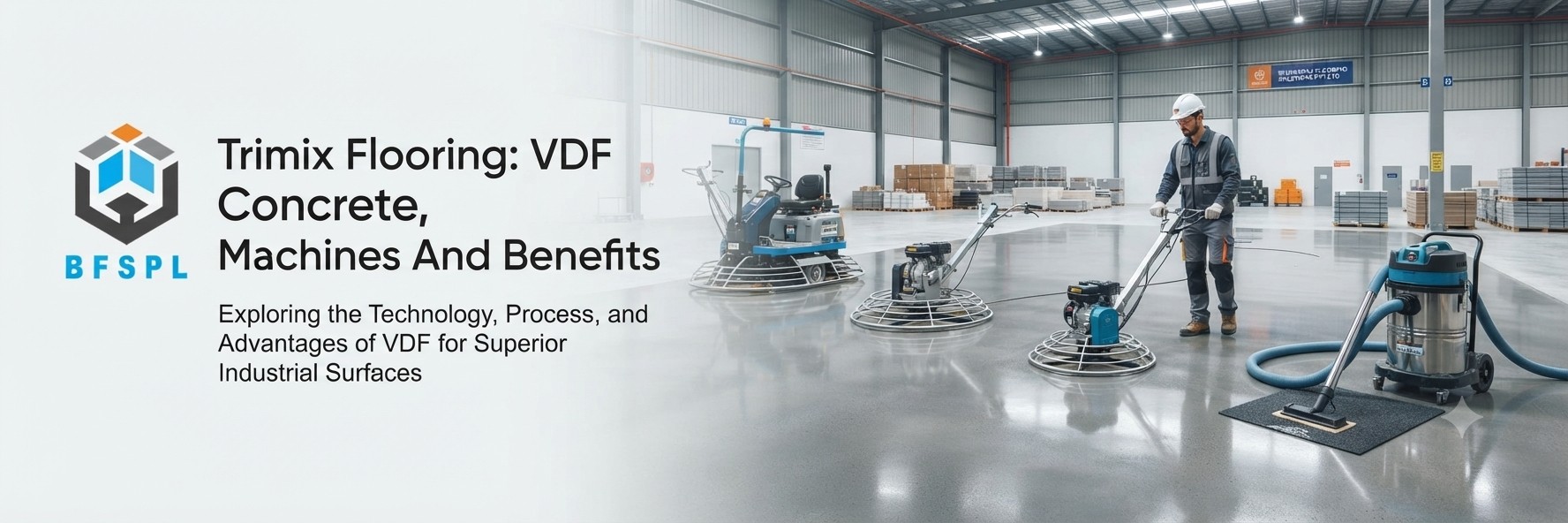
Several types of equipment can be used during the flooring process. The machinery used will depend on the size of the project, concrete mix specifications, floor requirements, and site conditions among other factors.
VDF Flooring Machine is often associated with vacuum dewatering and helps remove excess water from freshly laid concrete.
Other equipment can include:
Screed vibrators
Surface vibrators
Power trowels
Concrete mixers
Laser or manual levelling equipment
Vacuum pumps
Cutting machines for joints
Each piece of machinery serves a different purpose and, together, they help produce a consistent floor finish.
What Are The Main Steps In Trimix Flooring?
The flooring process generally goes through several important steps.
1. Base Preparation
The base or sub-base must be prepared before concrete placement. Unwanted material, debris and other unwanted layers must be removed from the base course.
The base course should provide suitable support to the proposed floor and should be properly compacted.
2. Reinforcement Placement
Depending on the project specification, reinforcement can be placed before concrete placement. The reinforcement detailing should be determined according to the requirements of the floor.
3. Concrete Placement
Concrete is placed throughout the prepared area to the designed thickness and level.
4. Levelling And Compaction
The freshly placed concrete is levelled and compacted using appropriate equipment.
5. Vacuum Dewatering
Where applicable, excess water can be extracted from the concrete using vacuum equipment.
The process must be performed correctly to obtain the desired results without damaging the surface finish.
6. Mechanical Finishing
Mechanical finishing equipment is used to close and finish the surface. Several passes may be required depending on the concrete consistency and desired finish.
7. Joint Cutting
Concrete joints are often required to control cracking and facilitate the expansion and contraction of the slab. Joint cutting should be done according to the requirements and site conditions.
8. Curing
Curing is an important final stage. The concrete must be cured appropriately after finishing.
If you are comparing Trimix with other concrete floor construction methods, see our guide onLaser Screed Flooring and super-flat industrial floors.
What Are The Benefits Of Trimix Flooring?
When correctly specified and executed, Trimix Flooring can offer several benefits for commercial and industrial applications.
Improved Surface Density
Mechanical compaction and finishing can help produce a dense concrete surface suitable for heavy traffic and demanding conditions.
Smooth Surface Finish
Proper levelling and mechanical finishing can create a more consistent surface than traditional hand finishing.
Suitable For Heavy Traffic
Warehouses, workshops, factories and other industrial facilities may require floors exposed to regular traffic of workers, vehicles, equipment and materials.
Easier Maintenance
A suitable concrete surface can be relatively easy to clean and maintain, especially when the floor is correctly designed for the application.
Better Operational Surface
A consistent floor can also facilitate the movement of trolleys, equipment and material-handling vehicles in suitable applications.
Where Can Trimix Flooring Be Used?
The flooring method can be considered for various commercial and industrial applications where a durable floor is desired.
Common applications can include:
Warehouses
Factories
Workshops
Industrial facilities
Commercial buildings
Parking areas
Garages
Storage facilities
Manufacturing units
Large open floor areas
Appropriate floor specification depends on the expected level of traffic, loads, equipment, working conditions and intended application of the facility.
What Factors Affect Trimix Flooring Quality?
Good quality flooring requires good preparation. The main influencing factors will depend on the project requirements.
Important factors include concrete quality, floor thickness, base and reinforcement, level control, weather conditions, equipment operation, joint cutting and curing, among others.
Inadequate preparation can cause problems even if the flooring project uses high-quality concrete.
For example, an unsuitable base can lead to settlement or poor support. Inappropriate curing can also affect surface development, while poor joint cutting can lead to uncontrolled cracking.
Professional assessment of the site will help find the appropriate construction method and specification.
Factors such as concrete quality, reinforcement, joint design, curing, surface finishing, and quality control are important when constructing concrete floors. For additional technical guidance, refer to concrete floor construction guidancefrom the American Concrete Institute.
How Does Trimix Flooring Differ From Conventional Concrete Flooring?
Both methods can use concrete, but the construction and finishing approach can be different.
Conventional concrete floors may involve more manual levelling and finishing depending on the project requirements. Trimix methods use special equipment and procedures to ensure compaction, water removal, levelling and surface finishing.
The choice should be based on the project requirements rather than just the name. It is also important to consider factors such as floor area, loading requirements, finish, schedule, budget and maintenance before selecting a flooring option.
How Can You Maintain A Finished Concrete Floor?
Regular maintenance can help preserve a finished concrete floor.
Dust, dirt, oil and other unwanted material should be removed on a regular basis. Spills should also be removed as soon as possible, especially in industrial environments where chemicals or oil can come into contact with the floor.
Heavy equipment should always be operated on a floor suitable for its weight.
Cracks, damaged joints, surface imperfections and other problems should be investigated instead of simply covering up the problems. Early inspection can help prevent minor maintenance issues from becoming major problems.
Why Is Professional Installation Important?
Concrete flooring requires coordination of materials, equipment and workers. Proper installation requires an experienced flooring professional who can help identify suitable specifications for the site, organise concrete placement, operate the machinery and ensure appropriate finishing, joint cutting and curing.
VDF Flooring Machine and other equipment must also be operated correctly to prevent unnecessary surface variation and achieve a consistent flooring surface. Therefore, a professional installation can help produce flooring of sufficient quality to meet the intended application.
How Can You Choose The Right Trimix Flooring For Your Project?
Trimix Flooring can offer a practical concrete flooring solution for warehouses, factories, workshops, parking areas and other facilities exposed to demanding conditions.
The quality of the final floor depends on several other factors besides just the concrete mix. Base preparation, reinforcement, levelling, dewatering, mechanical finishing, joint cutting and curing all play a part in determining the quality of the finished floor.
When considering a new industrial or commercial concrete floor, assess the expected load, traffic, floor area, surface requirements and site conditions before selecting the flooring specification. Consulting an experienced flooring contractor can help you choose the best construction method and machinery for your project.
Frequently Asked Questions
What Is Trimix Flooring?
Trimix Flooring is a concrete flooring method that uses mechanical compaction, levelling, vacuum dewatering and surface finishing to produce a dense and uniform floor.
What Is VDF Concrete?
VDF Concrete refers to concrete that has been processed using vacuum dewatering to remove excess water from the freshly placed concrete. This can help improve the density and surface quality of the finished floor if the process is correctly executed.
What Is A VDF Flooring Machine Used For?
A VDF Flooring Machine is used during the vacuum dewatering stage to extract excess water from the freshly laid concrete. The process helps prepare the surface for mechanical finishing.
Where Can Trimix Flooring Be Used?
It can be used in warehouses, factories, workshops, parking areas, commercial buildings, manufacturing units, garages and other facilities requiring durable concrete flooring.
Is Trimix Flooring Suitable For Heavy Loads?
It can be suitable for heavy-load applications when the floor is properly designed for the expected loads, traffic, concrete specifications, reinforcement and site conditions.
How Is Trimix Flooring Maintained?
Regular cleaning, prompt removal of oil and chemical spills, inspection of joints and cracks, and timely repairs can help maintain the floor and prolong its service life.
Why Is Professional Installation Important?
Professional installation ensures proper base preparation, concrete placement, dewatering, levelling, finishing, joint cutting and curing, which are important for achieving consistent flooring quality.
Need Professional Trimix Flooring Services?
Contact BiswasRaj FlooringSolutions to discuss your flooring requirements and get suitable guidance for your project.