


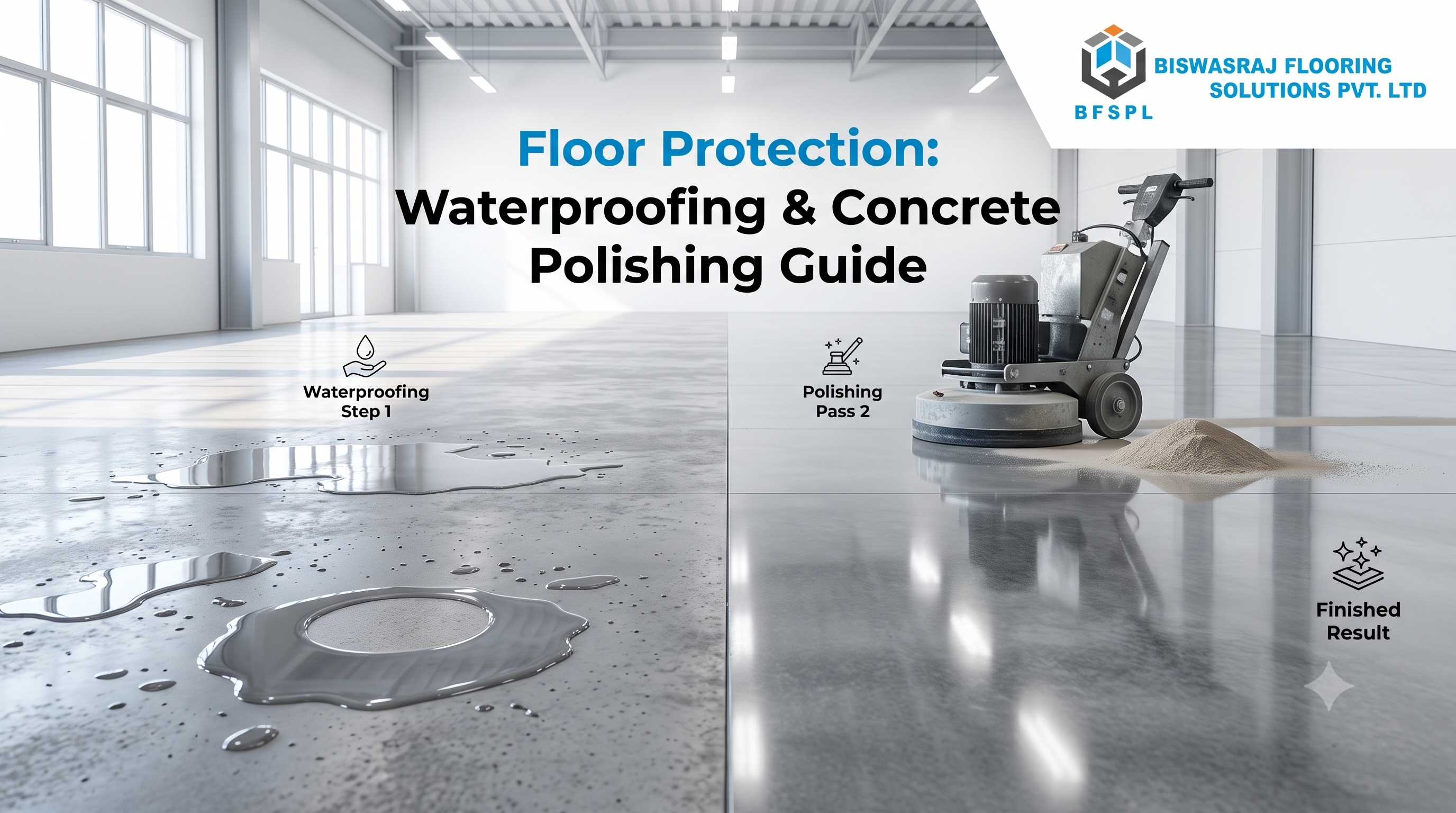
Floor Protection: Waterproofing & Concrete Polishing Guide
 07 Sep 2026
Floor Protection: Waterproofing & Concrete Polishing Guide
- Posted by Nagananda Udupa
Industrial and commercial floors endure a variety of stressors on a regular basis. From traffic and moisture to dusting and abrasion, floors require regular maintenance. As such, floor protection should be considered as a regular maintenance issue rather than an after thought repair issue.
There are several different forms of floor protection, but waterproofing and polishing are two of the most common methods that can be used on suitable surfaces.
What Is Floor Protection?
Floor protection refers to a variety of treatments, floorings and practices that can be used to protect a floor from environmental, mechanical and chemical deterioration
A commercial or industrial concrete floor can be subjected to a number of damaging influences, including: Water and moisture exposure Surface dusting Forklift and vehicle traffic Heavy load bearing Chemical exposure Oil and grease Surface staining Wear and tear Poor maintenance These factors should be taken into account when determining the type of floor protection being used. Floor protection is not a single activity. Rather, it is a broad term that encompasses a range of treatments that should be selected depending on the floor's condition and needs Concrete is a popular choice of construction material for warehouses, factories, workshops, showrooms and other commercial or industrial facilities. While this versatile building product has a number of advantages, it is not impervious to deterioration. Concrete floors can be damaged by moisture penetration, abrasion from forklifts and vehicles and chemical exposure Water can penetrate through cracks, joints, porosity and untreated surfaces. Heavy traffic can lead to surface wear, while concrete that has been weakened by moisture can lead to surface dusting with ongoing traffic. Poor floor maintenance can also be a contributing factor to premature deterioration. As such, it is recommended that existing floor conditions are carefully assessed prior to selecting a form of floor protection to ensure suitable results. Water and moisture exposure can be a serious problem for concrete, especially in basements, parking structures and other below ground facilities. Water can penetrate concrete through cracks, porosity, joints and untreated surfaces and lead to deterioration of the concrete and surrounding structures Waterproofing is a suitable way to protect concrete from moisture penetration and subsequent damage. Waterproofing can be applied to: Basements Parking structures Industrial concrete floors Wet areas Sub grade structures Chemical storage areas Groundwater exposure areas Prior to selecting a waterproofing system it is important to determine the source of the water penetration. Surface water, ground water and rising damp can have different causes and require different treatments. Waterproofing treatments offer a range of benefits, including: Limit water penetration Protect concrete from moisture exposure Reduce deterioration from moisture Protect suitable sub grade structures Limit recurring water damage Despite the benefits of waterproofing treatments, it is important to note that, while they are designed to prevent moisture penetration, they are not a universal cure all for all concrete floor damage While waterproofing addresses moisture exposure, concrete polishing is a type of floor protection that focuses on treating the concrete's surface. Concrete polishing involves using diamond abrasives to grind the surface of the concrete. A chemical densifier can be used in conjunction with the grinding to densify the concrete and reduce dusting The polishing process can be used on warehouses, factories, showrooms and other commercial or industrial facilities that are looking to improve a slab's appearance and provide a hardwearing, easily maintained floor surface Concrete polishing can provide a range of benefits, including: Reduced concrete dusting Increased resistance to abrasion A refined, smooth surface Easier maintenance and cleaning Improved reflectivity A hardwearing surface A refined appearance An improved condition of an existing slab An alternative to replacing a floor Waterproofing and polishing can both be useful types of floor protection, but they address two very different problems. Waterproofing protects against moisture penetration, while concrete polishing improves the surface quality of a concrete slab In short, waterproofing protects against moisture, while polishing strengthens and refines the surface of the concrete The right type of floor protection should always be selected based on the actual condition and application of the floor in question. Concrete dusting is a common problem in industrial facilities. A weak or poorly conditioned slab can begin to generate fine dust with regular forklift or vehicle traffic. Not only does this require extra cleaning and maintenance, but it can also lead to contamination of stored goods and surrounding surfaces Concrete grinding and polishing or mechanical densification processes can help to refine and strengthen a suitable slab. Severely damaged concrete, however, may not be suitable for polishing and may require repair work to prolong its service life. A professional assessment can determine which form of treatment is most appropriate. Industrial floors can be subjected to a great deal of mechanical stress. Forklifts, vehicles, pallet trucks and heavy machinery all put a strain on a floor surface with every journey undertaken across the slab. The cumulative effect of this traffic can have a negative impact on the structural integrity of the floor. When considering floor protection for a warehouse or factory, it is important to factor in: • Type and frequency of traffic • Wheel loads • Machinery weight • Storage loads • Chemical exposure • Floor condition Concrete grinding and polishing can be a viable form of floor protection for some high impact areas, but facilities that are exposed to aggressive chemical exposure or other extreme conditions may require industrial flooring or a protective coating system Floor protection need not be limited to preventing major structural deterioration. Many forms of floor protection can help to simplify general cleaning and maintenance requirements for a facility A dusty, uneven or pitted floor surface requires more frequent cleaning and maintenance than a smooth, hardwearing surface. Suitable coatings, polishing and other forms of floor protection can reduce the burden of routine cleaning and maintenance when applied to an appropriate substrate Regular inspection and maintenance are still required, however, because even a well protected floor can be exposed to conditions that make it prone to deterioration Prior to choosing a form of floor protection, it is important to determine what type of deterioration is taking place in the affected area of the floor Moisture exposure and penetration are a major concern for concrete, especially when they occur in basements or below ground areas. If this is the primary concern, it is important to determine the source of the penetration and ensure an appropriate waterproofing system is used. If the floor is a structurally sound slab that has begun to dust or wear with age, concrete grinding, polishing or densification processes may be the solution Chemical exposure requires a different approach to floor protection, depending on the type of chemicals that are being used. Polished concrete can be a useful option, but aggressive chemical exposure may require a chemical resistant coating system. Heavy machinery or traffic, such as forklifts, requires a form of floor protection that can withstand the test of time. Industrial flooring, coating systems or concrete polishing can be useful options, depending on the specific conditions of the floor in question. It is an easy mistake to make when it comes to floor protection to select a form of treatment without taking the time to understand the existing conditions of the floor Avoid these common floor protection mistakes: • Polishing a floor without resolving moisture problems • Polishing severely deteriorated concrete • Selecting a treatment purely on price • Ignoring cracks and joints • Coating a floor without considering chemical exposure • Poor surface preparation • Using the same treatment for different applications These are just some examples, however. The right type of protection will always depend on the specific conditions of the floor in question A professional floor inspection should always take a number of relevant factors into account, including: • Cracks and joint deterioration • Surface dusting or scaling • Moisture • Stains • Uneven areas • Existing coatings • Oil or chemical contamination A floor with minor surface wear issues will require a different treatment than a floor with widespread moisture penetration problems. Professional assessment can help identify the right floor protection for any condition. Floor protection refers to a variety of treatments, floorings and practices that can be used to protect a floor from environmental, mechanical and chemical deterioration It depends on the application. Waterproofing is particularly important for areas where water exposure is an issue. Yes. Concrete polishing can improve surface hardness, reduce dusting and improve resistance to everyday wear when the existing concrete is suitable. No. Waterproofing primarily addresses water and moisture, while concrete polishing refines and hardens the exposed concrete surface. Many existing concrete floors can be polished if the slab is sufficiently sound. Its condition, cracks, contamination and moisture levels should be assessed prior to polishing. Consider moisture, traffic, loads, chemicals, surface condition, maintenance requirements and the intended use of the facility. A professional site assessment can help identify the appropriate solution. Get your floor assessed by a professional flooring specialist and choose a solution based on your facility's actual requirements.Why Do Concrete Floors Require Floor Protection?
1. Waterproofing Protects Concrete Floors From Moisture
Benefits of Waterproofing
2. Concrete Polishing Protects Concrete Floor Surfaces
Benefits of Concrete Polishing
Waterproofing Vs. Concrete Polishing
3. Floor Protection Helps Address Concrete Dusting
4. Protect Floors From Forklifts and Heavy Traffic
5. Floor Protection Can Reduce Maintenance Requirements
How to Choose the Right Floor Protection Method
Determine What Problem Is Being Faced
Common Floor Protection Mistakes to Avoid
Floor Protection for Different Applications
Inspect the Existing Floor Prior to Protection
Frequently Asked Questions
What is floor protection?
Is waterproofing necessary for concrete floors?
Does concrete polishing protect concrete floors?
Is waterproofing the same as concrete polishing?
Can old concrete floors be polished?
How can I choose the right floor protection system?
Need to protect your industrial or commercial floor?