


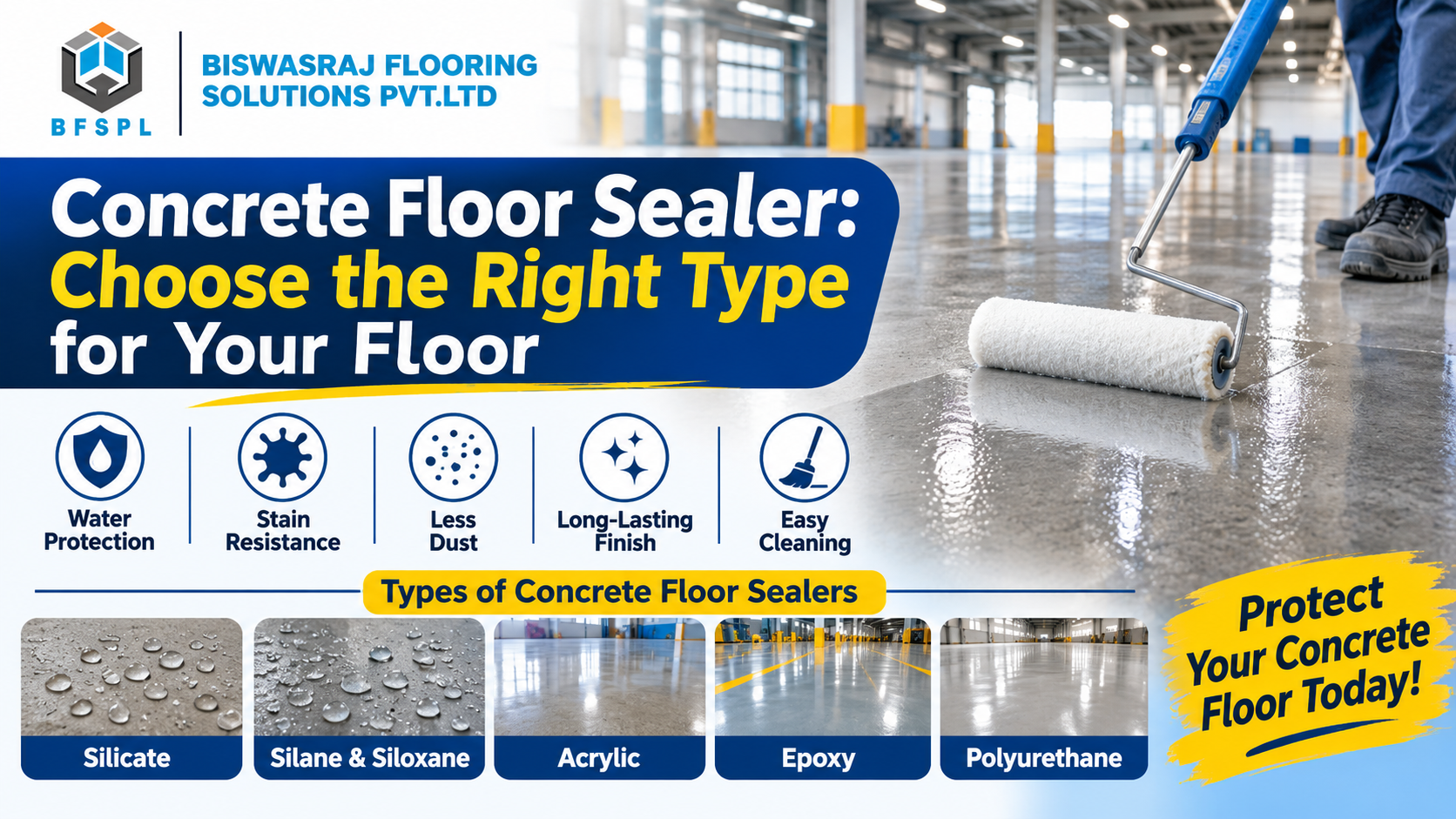
A concrete floor sealer is a liquid treatment that soaks into the slab or forms a thin film on top to keep out water, oil, and dust. Most products belong to 5 families: silicates, silane and siloxane, acrylic, epoxy, and polyurethane.
Choosing between them depends on traffic, spills, and whether the floor is indoors or outside. If dusting is your main problem, compare this guide with our page on floor densification and dust proofing services.
What are the key facts about our services?
- Business type
- HomeAndConstructionBusiness
- City
- New Delhi
- Main types
- Silicate, silane and siloxane, acrylic, epoxy, and polyurethane
- Surface requirements
- Cured, clean, dry, and free of old coatings
What Does A Concrete Floor Sealer Actually Do?
A concrete floor sealer slows down what soaks into the slab. Bare concrete is porous, so water, oil, and spilled chemicals sink in, leave stains, and weaken the surface over time. A sealer closes or lines those pores so spills stay on top long enough to clean.
On a working floor, that protection shows up in a few ways:
Less dusting: a sealed or densified surface sheds fewer fine particles
Fewer stains: oil, grease, and tyre marks wipe up instead of soaking in
Easier cleaning: a tighter surface releases dirt with less scrubbing
Moisture control: water and water-borne salts are kept out of the slab
Better look: some sealers add sheen or deepen the colour of the concrete
It is just as important to know what a sealer cannot do. It adds no structural strength, it will not close an active crack, and it will not fix a floor that is uneven or crumbling. Those problems need repair before any sealing starts.
What Is The Difference Between Penetrating And Film-Forming Sealers?
A penetrating sealer soaks into the concrete and reacts inside the pores, leaving almost no visible layer. A film-forming sealer dries into a thin coat on top. The choice between them decides how the floor looks, feels underfoot, and wears.
Penetrating products include silicates and silane siloxane blends. Caltrans, which approves these products for California road structures, explains that silane penetrating sealers repel water and block chloride entry while letting water vapour escape. That breathability is why they suit outdoor slabs and damp areas.
Film-forming products, such as acrylic, epoxy, and polyurethane, behave differently:
They add gloss and resist stains well
They wear away in traffic lanes and need recoating
They can turn slippery when wet unless an anti-slip additive is used
They can trap moisture and peel if laid on a damp slab
Each group has a place. Pick a penetrating type when traction and breathability matter most, and a film-forming type when stain resistance and appearance lead the list.
Which Sealer Type Suits Which Floor?
Match the concrete floor sealer to the traffic, the spills, and the setting. A silicate suits busy indoor floors that dust, silane and siloxane suits outdoor and damp slabs, and film-forming types suit areas that need stain resistance or a finished look.
| Sealer type | How it works | Best for | Limits |
|---|---|---|---|
| Silicate (sodium, potassium, or lithium) | Reacts inside the pores and hardens the surface | Warehouse and factory floors that dust | Little stain protection on its own |
| Silane and siloxane | Lines the pores with a water-repellent layer | Outdoor slabs, ramps, parking areas, damp zones | No gloss, limited oil resistance |
| Acrylic | Forms a thin film that adds sheen | Shops, showrooms, homes, decorative concrete | Soft, wears quickly under heavy traffic |
| Epoxy seal coat | Forms a hard, chemical-resistant film | Workshops, plant rooms, store rooms | Needs a dry slab, can yellow in sunlight |
| Polyurethane | Forms a tough, abrasion-resistant film | Topcoat over epoxy, high-wear areas | Needs careful moisture control during application |
Many floors use two products together. A common pairing is a silicate densifier to harden the slab, followed by a thin penetrating or film-forming sealer to add stain resistance.
Outdoor slabs need extra thought. Sun, rain, and grit wear films fast, so a breathable penetrating product usually lasts longer and stays safer underfoot.
When Is A Sealer Not Enough?
A sealer is a light protective layer. Heavy forklift traffic, strong chemicals, hot wash-downs, and strict hygiene rules need a thicker system, such as an epoxy or polyurethane coating, or a hardened topping laid with the slab.
Ask these questions before relying on a concrete floor sealer alone:
Do hard-wheeled forklifts or pallet trucks run on the floor all day?
Are acids, solvents, or hot oils spilled regularly?
Does the area need a seamless, washable finish for food or pharma hygiene?
Is the surface already worn, pitted, or breaking up?
If you answered yes to any of these, a sealer will wear through too quickly to protect the slab. Our concrete floor coating guide compares epoxy, PU, and heavy-duty resin systems for those conditions.
Sealers still have a role on these sites. Store rooms, corridors, plant rooms, and outdoor aprons often do well with a sealer, while the production floor gets a full coating.
How Do You Seal A Concrete Floor Step By Step?
Applying a concrete floor sealer is mostly preparation. The product goes on in thin, even coats, but the floor must be cured, clean, dry, and free of anything that blocks the pores. Skipping the preparation is the main reason sealers peel, haze, or fail early.
If you are planning how to seal a concrete floor, follow this order:
Confirm the slab has cured: new concrete must finish curing before most sealers go on.
Clean and degrease: remove dust, oil, and grease with a suitable cleaner and rinse.
Strip old treatments: grind or shot blast off old sealers, paint, and curing compounds.
Repair defects: fill cracks, patch spalls, and reseal damaged joints first.
Check moisture: tape a plastic sheet to the floor overnight and look for condensation.
Apply thin coats: spray or roll as the data sheet directs, without puddles.
Keep it ventilated: allow airflow and keep people away from solvent fumes.
Cure before use: allow the full drying time before foot traffic, and longer before vehicles.
Old sealers cause trouble long after they stop working. Our checklist of what to check before polishing a concrete floor explains why previous treatments must come off before any new finish goes on.
How Often Should You Reseal A Concrete Floor?
There is no fixed calendar, because traffic and weather wear a concrete floor sealer at very different rates. Reseal when the floor shows it: water soaks in instead of beading, stains start to stick, dust returns, or a film has worn through in the busy lanes.
A quick water test tells you a lot. Sprinkle a little water in a traffic lane and in a quiet corner, then watch for a few minutes:
| What you see | What it means | What to do |
|---|---|---|
| Water beads in both spots | The sealer is still working | Keep cleaning as usual |
| Water darkens the lane but beads in the corner | Traffic has worn the sealer in use areas | Reseal the lanes |
| Water darkens both spots quickly | The sealer has largely gone | Clean, prepare, and reseal the floor |
| Film is peeling or flaking | Poor bond or moisture under the film | Strip, check moisture, and reapply |
Build these checks into your routine floor care. Our industrial floor maintenance checklist shows where sealing and densifying fit among daily, monthly, and yearly tasks.
What Mistakes Make Sealers Fail?
Most sealer failures come from timing and preparation, not from the product. Sealing too soon, too thickly, or over contamination causes the peeling, white haze, and slippery patches people blame on the sealer itself.
| Mistake | What happens | How to avoid it |
|---|---|---|
| Sealing before the slab has cured | Poor bond, blotchy finish | Wait for curing to finish |
| Applying one thick coat | Puddles, haze, and soft spots | Use two thin coats instead |
| Sealing a damp slab | White blush and peeling film | Test moisture first |
| Sealing over curing compound | Sealer cannot reach the pores | Grind or blast the compound off |
| Gloss film on an outdoor ramp | Slippery surface in rain | Use a penetrating type or anti-slip additive |
| Light sealer in a forklift aisle | Wears through within weeks | Use a coating or hardener instead |
A small trial patch avoids most of these. Apply the product to one square metre, let it cure, and check the colour, sheen, and grip before doing the whole floor.
Not Sure Which Sealer Your Floor Needs?
Start with how the floor is used, not with a product label. Our team can inspect the slab, test its moisture and surface, and recommend a concrete floor sealer or a tougher system if the traffic demands it. Send us your floor details through our contact page to arrange a site visit.
Frequently Asked Questions about Concrete Floor Sealers
What is a concrete floor sealer?
A concrete floor sealer is a liquid treatment that either soaks into the concrete slab or forms a thin film on top to protect against water, oil, and dust.
How do I choose the right type of concrete floor sealer?
Choosing the right concrete floor sealer depends on factors such as the type of traffic, potential spills, and whether the floor is indoors or outdoors.
What are the main types of concrete floor sealers?
The main types of concrete floor sealers include silicates, silane and siloxane, acrylic, epoxy, and polyurethane, each serving different purposes and environments.
When should I reseal my concrete floor?
You should reseal your concrete floor when you notice that water stops beading on the surface or when the protective film wears through.
Can a concrete floor sealer repair cracks or level my floor?
No, a concrete floor sealer does not repair cracks or level an uneven floor; those issues need to be addressed before applying any sealer.
How long does joint sealant last?
- 3 to 5 years Typical life of joint sealant in normal traffic, a cue to check floor sealers at the same time BiswasRaj Flooring, Industrial Floor Maintenance Checklist
Serving India and nearby: Bangalore, Karnataka, New Delhi, Delhi.