

Epoxy Flooring: Types, Benefits, Applications and Guide
 29 Aug 2026
Epoxy Flooring: Types, Benefits, Applications and Guide
- Posted by Nagananda Udupa
Epoxyflooring is a versatile solution for durable, seamless and easily maintained surfaces in industrial, commercial and residential applications. It is suitable for installation over prepared concrete to provide a tough, impermeable coating that resists abrasion, staining and the effects of many chemicals.
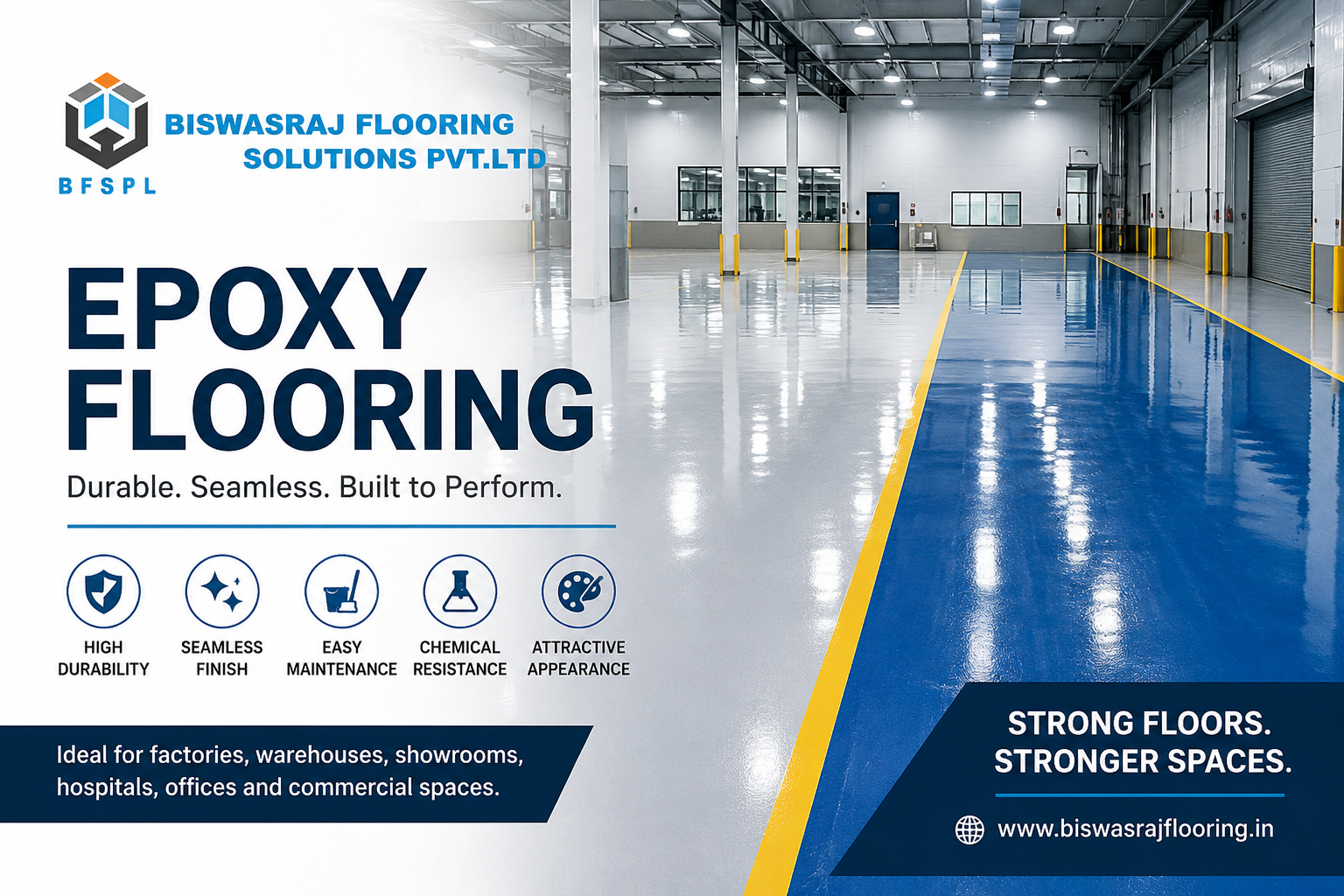
Due to the resilience and the variety of finishes, epoxyflooring is often found in factories and warehouses, but also in garages, showrooms, hospitals, offices and commercial spaces.
What Is EpoxyFlooring?
Epoxyflooring is a type of resinous flooring system designed to be applied over a prepared concrete surface. It usually bonds to the substrate creating a homogeneous and seamless surface instead of having grout and tile joints.
After curing the epoxysurface becomes a strong, stain-resistant and relatively easy to maintain floor. Epoxysystems come in different thicknesses and can be modified to suit the requirements of the application.
Some of the key elements affecting the final result and performance include the type of epoxy material, preparation, epoxy coating application, surface condition, and curing.
How Does EpoxyFlooring Work?
Before the epoxyis applied, the existing concrete needs to be evaluated. The debris, dust, oil, loose bits and any other contaminates need to be removed from the surface prior to grinding or any other mechanical preparation.
Depending on the condition of the concrete, this preparation step can be done with grinding machines or other mechanical means to help create a suitable profile.
Any cracks, damage spots or unevenness may need to be repaired to prepare the surface for the new flooring system.
After the preparation is done, a primer or a base coat can be applied and then the epoxymaterial in the desired thickness to meet the requirements of the application.
Depending on the system some additional components can be specified to achieve a decorative effect or increase the performance characteristics of the floor.
The system needs to cure before it is put into service to ensure the best results.
Following the recommendations of the epoxymanufacturer during the installation and curing can have a significant impact on the final result.
Types of EpoxyFlooring
Depending on the environment and the requirementsdifferent types of epoxysystems can be considered.
Some of the most common include:industrial, self-leveling, decorative and anti-static epoxyflooring systems.
IndustrialEpoxyFlooring
Industrialepoxyflooring is a system specifically designed to handle the severe demands of industrialfacilities. Factories and warehouses are some of the most common applications for this type of epoxy.
Depending on the equipment and the materials handled the system may need to be selected to resist abrasive forces, chemicals and other potential hazards.
By selecting a suitable industrialepoxysystem the desired results can be achieved. The requirements of the specific application should be taken into consideration when choosing the system.
For example: traffic, impact, moisture, chemicals, and the existing concrete condition.
When specifying an epoxysystem for warehouses the movement of materials and vehicles should also be considered.
Decorative EpoxyFlooring
Epoxysystems can also be specified for applications where the appearance is important. Epoxyflooring showrooms, offices and commercial spaces are some of the examples where a system with a decorative effect may be required.
The design, the color, the pattern, the flakes or any other elements can be incorporated to achieve the desired effect.
What Is an EpoxyFloorCoating?
An epoxyfloorcoating is a type of epoxymaterial applied over a prepared concrete surface to protect it from daily wear and tear, stains and other potential hazards.
The thickness and the specification, however, can vary depending on the application. A light-duty floor coating might be suitable for light traffic and a heavy-duty system would be required for an industrialapplication.
The requirements need to be evaluated to make sure the right material is selected. Some of the key considerations include: traffic, chemical exposure, moisture, concrete condition and the desired appearance.
Benefits of EpoxyFlooring
1. High Durability
A well-designed epoxysystem can be highly durable and resistant to impact, abrasion and other forces. The system can be selected to suit the expected traffic in the application.
2. Seamless Surface
Unlike traditional tiled surfacesepoxyflooring creates a seamless surface without grout lines. This makes the maintenance much easier and the floor more resistant to dirt and bacteria buildup.
3. Easy Maintenance
Epoxysystems generally require little to no maintenance. Sweeping and occasional mopping can usually be enough to keep the floor clean.
This makes epoxyflooring ideal for any facility where maintenance and appearance are important.
4. Chemical Resistant
Depending on the system some epoxymaterials can provide a certain degree of chemical resistance.
This means that the surface can resist potential spills and exposure to different substances. The level of protection, however, can vary depending on the product and the chemicals involved.
5. Attractive Appearance
Epoxysystems generally come in a variety of colors and finishes. This allows specifying an attractive and appealing floor without sacrificing the functionality.
6. Concrete Protection
Epoxysystem provides an additional layer of protection over the concrete. Epoxycoatings can help reduce concrete dusting, staining and other potential issues.
Where Is EpoxyFlooring Used?
Epoxyflooring can be used in a variety of settings. The applications can vary from industrialfacilities to commercial spaces. The selection, however, needs to be made based on the specific demands of the environment. Some of the common applications include:
Application | Key Advantages |
Factories | Industrial traffic, equipment movement |
Warehouses | Forklifts, pallet trucks |
Showrooms | Clean and attractive surface |
Hospitals | Cleanliness, smooth surface |
Offices | Modern appearance |
Garages | Durable and easily maintained |
Retail spaces | Various colors and designs |
Commercial areas | Modern and functional |
EpoxyFlooring vs Traditional Concrete Flooring
Concrete is a tough and durable substance suitable for most applications. Over time, bare concrete, however, can develop dusting, staining and other surface imperfections.
Applying an epoxycoating can help minimize these issues by adding an additional layer of protection. Epoxyflooring should not be considered as a solution for all concrete problems, however. Issues such as structural integrity, moisture and other substrate problems should be addressed before the new flooring system is installed.
A professional evaluation can help identify any potential issues with the existing substrate.
Explore our range of other flooring solutions from BiswasRaj Flooring, designed to meet different industrial, commercial, and residential flooring requirements.
Factors to Consider Before Installation
Before specifying a flooring system the following factors should be considered:
Traffic: Pedestrian, trolley, pallet truck or forklift traffic
Chemical exposure: Oils, solvents, acids or other substances
Moisture: Potential moisture problems
Surface condition: Cracks, damage, contamination
Thickness: The requirements of the application
Finish: Decorative or functional requirements
Maintenance: General maintenance and cleaning
Why Professional Installation Matters
The final result of any epoxyflooring project can depend on a number of factors. A professional installer, however, can make sure the best results are achieved. Proper substrate preparation plays a major role in this process.
While the material itself might be of high quality, if the surface is contaminated, damaged or otherwise unsuitablethe final result can be compromised.
A professional installer, on the other hand, can evaluate the conditions, determine the necessary steps and choose the best possible system for the application.
They can consider the requirements of the system before installation and make the appropriate adjustments to the surface.
Because of the demands of the application, flooring problems can be costly in industrialfacilities. The professionalexpertise can help avoid potential issues and the associated expenses.
Frequently Asked Questions
Is epoxyflooring suitable for warehouses?
Yes, epoxyflooring can be suitable for warehouses because it can handle the traffic and the movement of materials. The system, however, needs to be selected based on the specific demands of the application.
A professional installer, on the other hand, can evaluate the requirements and the conditions of the existing substrate to specify the best epoxysystem for warehouses.
How long does epoxyflooring last?
The lifespan of the system can vary depending on the requirements of the application. The type of system, the quality of the installation, the condition of the existing concrete and the general maintenance also plays a role.
In most cases, heavy-duty applications require a different system than light-traffic applications.
Can epoxybe applied over existing concrete?
Yes, epoxycan be applied over existing concrete. The substrate, however, needs to be prepared to meet the requirements of the new flooring system.
Cracks, damage spots, contamination and other issues may need to be addressed before the new system is installed.
Is epoxyflooring easy to clean?
Epoxyflooring is generally easy to maintain. The system requires daily sweeping and occasional mopping to remove any potential contaminants.
Because it has fewer joint and seams compared to traditional tiled floors, it also tends to be more resistant to dirt buildup and bacteria growth.
Is industrialepoxyflooring suitable for factories?
Yes, industrialepoxyflooring can be suitable for factories. The system can usually be designed based on the specific demands of the application.
Epoxyflooring for factories, however, should be selected to handle the traffic, abrasion, and other potential hazards.
What is the difference between epoxyflooring and epoxyfloorcoating?
An epoxyfloorcoating usually refers to a protective coating applied over concrete. Epoxyflooring, on the other hand, can refer to a group of different systems.
There are significant differences, however, in the final thickness, building requirements and general expectations depending on the type of application.
Choose the Right EpoxyFlooring Solution
Epoxyflooring can be a great option for many applications that require a durable surface. It can be suitable for warehouses and factories that require an industrialfloor coating, but also for showrooms, hospitals, offices or any other commercial space that requires seamless and easily maintained flooring.
The selection, however, should not be made based on appearance or price alone. The demands of the application, the condition of the existing concrete, potential traffic issues and other factors should be considered.
Are you considering a durable flooring solution for your commercial or industrialspace?
Contact BiswasRaj Flooring for an expert opinion and selection of the best option for your application.