


7 Signs of Serious Floor Damage
 02 Sep 2026
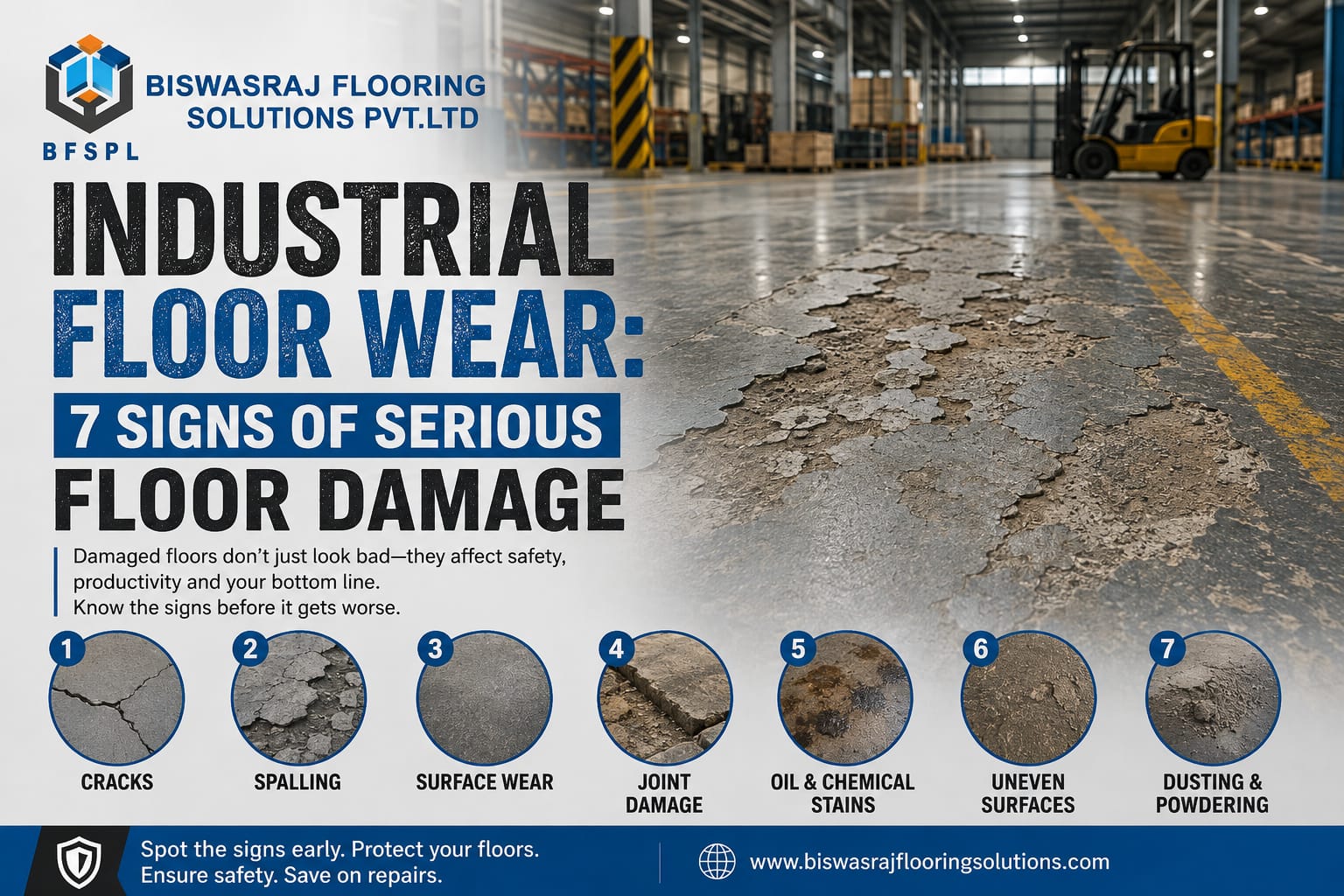
7 Signs of Serious Floor Damage
- Posted by Nagananda Udupa
Factory floors are subjected to a number of demanding conditions, like heavy vehicles, fork lifts, equipment, chemicals, dampness and continuous flow of traffic, which can eventually lead to degradation of the floor surface. Although minor signs may seem to be of little concern, they could actually be indicators of developing problems that may require expert intervention.
Being aware of the warning signs can help factory owners to address the concerns in good time and save them from unnecessary expenditure and disruption to factory work flow.
Industrial Floor Wear:
The surface of an Industrial Floor can be subject to wear and tear from vehicle traffic, impact, abrasion, overload, moisture, chemical exposure or inappropriate maintenance practices. The degree of deterioration depends on the type of construction, environmental influences and levels of traffic flow.
Although every surface will show some signs of wear, certain changes should not be ignored, especially if they occur in zones of forklift or equipment traffic
7 Signs Your Factory Floor Needs Professional Attention:
1. Excessive Surface Dusting
It is common for concrete to shed some dust on a regular basis, but if it starts to happen more frequently even after cleaning, it could be an indicator that something is not right. Surface dusting may compromise housekeeping and conditions for equipment operation.
A professional assessment will identify if there are any structural changes occurring beneath the surface.
2. Increasing Floor Cracks
While small cracks in concrete are not uncommon, changes to their size, shape or pattern may need expert attention. Widening or progressive cracks, particularly if they coincide with areas of surface deterioration, should be examined by a professional.
Cracks along joints, loading bays or in traffic zones should be given special attention, as repetitive vehicle movement in these zones can contribute to edge damage.
Some surface deterioration may be accelerated by the movement of vehicles.
3.Uneven or Depressed Areas
Changes to floor level can compromise vehicle or pallet movement and the operation of machinery. Irregularities can develop as a result of settlement, deterioration of the surface layer or construction faults. If a previously even floor begins to exhibit unevenness or depressions, a professional assessment will help to determine what the underlying cause might be.
4.Damaged Floor Joints
Floor joints are designed to manage traffic flow and prevent cracking, but they can also be prone to deterioration. Chipped edges, gaps, displaced material or cracks can develop as a result of traffic movement and can progressively spread to adjacent joints.
Timely intervention can often prevent isolated damage from spreading to surrounding areas.
5. Surface Chipping and Spalling
Spalling is the term used to describe the flaking or chipping of concrete surface material. Impact, moisture, poor surface quality and excessive loading are all contributing factors. While small scale surface irregularities can sometimes be resolved by localised repair, more widespread spalling may require more extensive intervention.
6. Noticeable Wear in High Traffic Zones
Some areas of a factory floor will necessarily see more traffic than others, such as fork lift routes, loading bays, production zones and equipment operating areas. These zones will exhibit more rapid surface wear than less used areas, so it is important to monitor them closely.
If these high traffic zones begin to exhibit roughness or other surface irregularities, it may be time to consider intervention. When the same area begins to require repairs on a regular basis, it is an indicator of a potentially underlying issue. Instead of focusing only on the immediate concern, it is important to investigate causes of repeated deterioration. A professional can examine the zone and suggest appropriate intervention based on traffic, loading, moisture or other factors. Concrete Floor Repair may be necessary if the surface of the floor begins to exhibit significant deterioration, irregularities or other defects that compromise safe and efficient operation. Depending on the nature and extent of the problem, a professional can advise on the most appropriate form of intervention. Surface grinding or densification may be sufficient in some circumstances, while more severe cases may require refurbishment of the affected area or even entire floor. It is important to note that a worn floor does not always require total replacement of the surface. If the structural integrity of the concrete substrate is sound, the affected areas can be repaired to restore the functionality and appearance of the surface. Depending on the nature and extent of the problem, a professional can advise on the most appropriate form of intervention. In some instances, simple surface grinding or densification may be sufficient, but more severe cases may require refurbishment of the affected area or even entire floor. The longer problematic areas are left untreated, the more likely they are to cause wider issues. Degraded joints can see increased impact, while other forms of surface degradation can become more widespread. Early intervention gives the opportunity to schedule necessary maintenance and refurbishment around workflow and ensures that the underlying causes are identified and addressed. Despite best efforts, factory floors will inevitably see some form of wear and degradation. However, some practices will help to prolong the working life of the surface and prevent unnecessary expenditure on repairs. These measures include: Managing traffic flow where possible Avoiding excessive loading Keeping chemical or oil spills at bay Ensuring that joints and drainage areas are kept clear Monitoring high traffic zones for wear Addressing any developing irregularities or surface degradation Choosing appropriate maintenance or protection products It is always important to choose the right maintenance practices and products based on specific operational needs. The signs of floor wear and degradation should not be ignored, as they will inevitably impact negatively on workflow and efficiency of the factory. From excessive dusting and widening cracks to irregularities and recurring damage, each warning sign will give useful insight into the general health of the factory floor. By addressing the concerns in good time, factory owners can ensure that appropriate intervention is scheduled to minimise disruption and unnecessary expenditure. For expert advice and professional intervention relating to Industrial Floor assessment and Concrete Floor Repair, turn to BiswasRaj Flooring Solutions for assistance with your factory flooring requirements. The main signs of industrial floor wear include excessive dusting, widening or developing cracks, unevenness or depressions in the floor, damaged joints, flaking or spalling of the surface, excessive wear in high traffic zones or areas of recurrent damage. The severity of Floor Cracks varies depending on their size, location, pattern, depth and whether they are progressing over time. Cracks that accompany any movement or deterioration should be given special attention. Concrete Floor Repair should be considered when the signs of deterioration start to impact negatively on workflow, safety or the service life of the floor. It is possible to refurbish a worn factory floor instead of replacing it, depending on the nature of deterioration and whether the structural integrity of the substrate is unaffected. The causes of recurrent floor damage vary, depending on the nature of the issue, but they often include excessive loading, traffic flow, joint degradation, moisture or other environmental influences. A professional assessment will determine the underlying cause. Fork lift traffic routes, loading and unloading zones, production areas, machinery operation zones, joints and any other high traffic areas generally require closer monitoring. Need reliable industrial flooring solutions? 7. Recurrent Repairs to Same Area
Concrete Floor Repair:
Concrete Floor Repair or Refurbishment?
Why Early Intervention Matters:
How to Protect Your Factory FloorIndustrial Floor Degradation: Repair or Refurbishment?
Frequently Asked Questions:
1. What are the main signs of industrial floor wear?
2. Are all Floor Cracks serious?
3. When should I consider Concrete Floor Repair?
4. Can a worn factory floor be refurbished instead of replaced?
5. Why do some areas repeatedly develop floor damage?
6.Which areas of a factory floor require closer monitoring?
Explore BiswasRaj Flooring Solutions for professional floor repair, coating, and refurbishment services.